
Research subjects in Computer Science
Discover more about PHDs in Computer Science: |
|---|
Why study a Computer Science research degree at Huddersfield?
Research in Computer Science at Huddersfield gives you the opportunity to develop innovative technologies that address major global challenges,
- You’ll work across a range of emerging technologies, research areas, and applications, including artificial intelligence, cyber security, autonomous systems, sustainable computing, and immersive digital experiences.
- You'll join a thriving and ambitious postgraduate research community whose research is driven by real-world impact, combining cutting-edge scientific discovery with practical solutions for industry, society, and public services.
- You'll work alongside internationally active researchers and have access to state-of-the-art facilities.
- With a rapidly growing research profile and a strong commitment to researcher development, Huddersfield provides an inspiring environment in which to undertake impactful and career-enhancing research.
What are the benefits of a Computer Science research degree?
- Research students benefit from a vibrant and collaborative research culture, working alongside internationally active academics and external partners on projects that address challenges in artificial intelligence, cyber security, healthcare, digital transformation, autonomous systems, sustainability and emerging technologies.
- You'll have opportunities to publish in leading journals and conferences, present your work to international audiences, collaborate with researchers from around the world, and develop advanced technical, analytical and research skills that are highly valued across academia and industry.
- With access to specialist laboratories, high-performance computing resources, industry-standard software, and strong links with businesses, public sector organisations and healthcare providers, Huddersfield provides an excellent environment for developing the knowledge, experience and innovation skills needed for successful careers in research, academia, data science, artificial intelligence, cyber security and the wider digital economy.
Research disciplines in Computer Science


Sustainable Computing, High-Performance Analytics
A PhD in Sustainable Computing, High-Performance Analytics and Digital Twins provides the opportunity to explore how advanced computing can support efficient decision-making and more sustainable futures.

Visual, Immersive and Creative Computing
A PHD in this area brings together expertise in visualisation, games development, interactive systems, creative technologies, immersive environments, digital audio, psychoacoustics and human-centred computing.

Information Systems, Data Science & Computing
A research degree in Information Systems, Data Science and Applied Computing gives students the opportunity to investigate how digital technologies, data and intelligent systems can improve organisations, services and decision-making.

Key achievements and projects

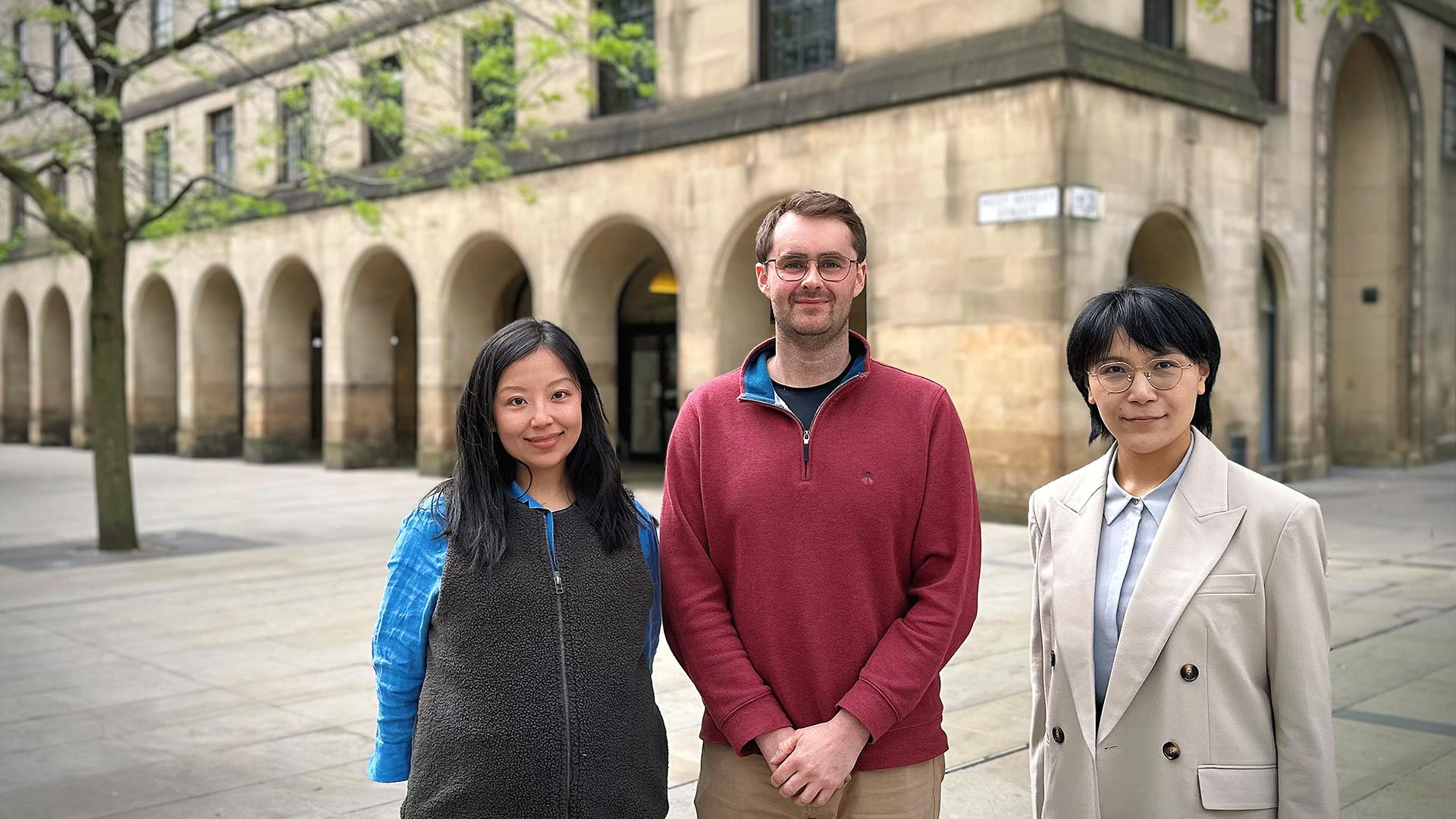
Notable research projects
Huddersfield researchers are working with an exciting number of external bodies, and exploring key areas such as AI for healthcare, cyber security and public-sector impact.
Our research environment and culture
Our research environment brings together a collaborative research community, state-of-the-art facilities and internationally active research centres and institutes.
Postgraduate Computer Science researchers benefit from opportunities to work across disciplines, engage with industry and external partners, and contribute to impactful research using advanced technologies and specialist infrastructure.


Collaborative culture and community
Computer Science postgraduate researchers join a vibrant, collaborative and rapidly growing research community that combines fundamental research with real-world impact.

Our research centres and institutes
Computer Science research is supported through internationally recognised centres and institutes including the following.
- Centre for Autonomous and Intelligent Systems (CAIS): Undertaking research in artificial intelligence, machine learning, automated planning, robotics, autonomous systems and intelligent decision-making.
- Centre for Cyber Security (CCS): Developing advanced approaches to cyber resilience, identity and access management, digital forensics and the protection of critical digital infrastructure.
- Centre for Multisensory and Immersive Computing (CMIC): Internationally leading hub for multidisciplinary HCI/XR research that advances how humans interact with digital, physical, and intelligent systems through immersive and multisensory computing. Integration of audio, visual, haptic, and behavioural computing within a human-centred framework.
Institutional (cross-School) level institutes
- Institute for Applied Artificial Intelligence (IAAI): Bringing together expertise from across the University to advance responsible, explainable and applied AI research with real-world impact.
Useful links
Department of Computer Science
Our Department of Computer Science is underpinned by pioneering research and delivered by innovative and creative practitioners.
Research degrees homepage
Find lots of useful information, including our list of research degrees, fees and funding advice and more about available research scholarships.