Huddersfield ranked as world's best in two THE Sustainability Impact Ratings
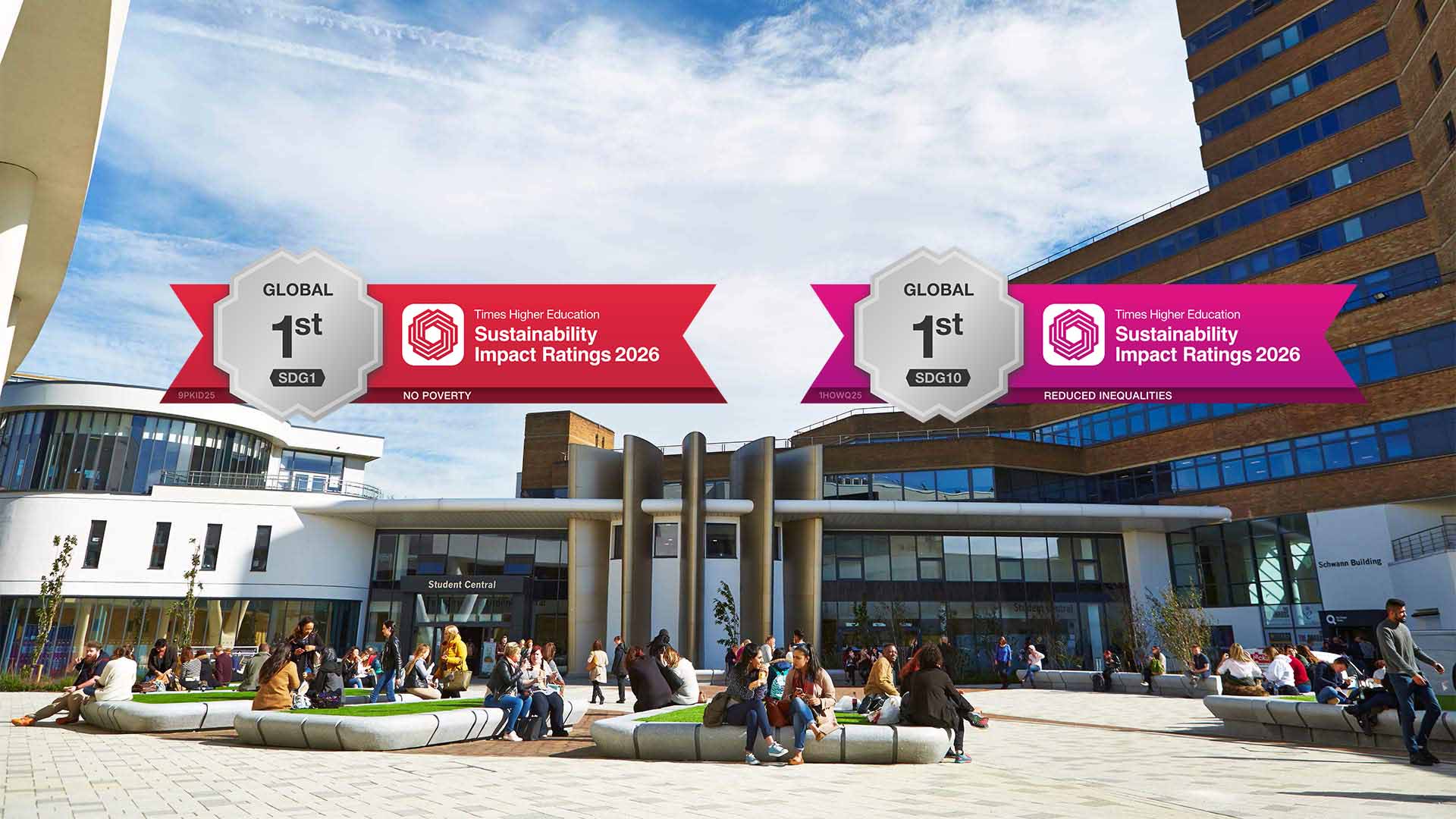
The University of Huddersfield’s work in embedding and encouraging sustainable development across all aspects of the institution has been rewarded with number one rankings in two of the Times Higher Education (THE) Sustainability Impact Ratings for 2026.
Huddersfield has retained its number one ranking for SDG 10 – Reduced Inequalities and is now ranked first in the world for SDG 1 – No Poverty, in the survey that identifies universities that have excelled against the United Nations’ Sustainable Development Goals (SDG). Huddersfield is first out of over 930 universities from around the world that submitted evidence in these categories.
The university is also in the top 100 in THE’s overall Sustainability Impact Ratings for the first time, and is 72nd out of 1,646 global universities surveyed. Huddersfield is also one of just two UK universities to have been rated first within any of the 17 SDG categories.
It is also inside the top 100 in five other of the eight Sustainability Impact Ratings categories in which it has been assessed.
From teaching and learning and student engagement to its research and external partnerships, the university actively addresses poverty and its causes and works to reduce inequality in society in the UK and internationally.
Deputy Vice-Chancellor Professor Tim Thornton said, "We are delighted to see the university’s world-leading contributions to tackling poverty and inequality and addressing the United Nations' sustainability agenda being recognised with these outstanding ratings. The research we undertake, our work with students and with our own colleagues, and our partnerships with communities locally and globally are making a real difference."
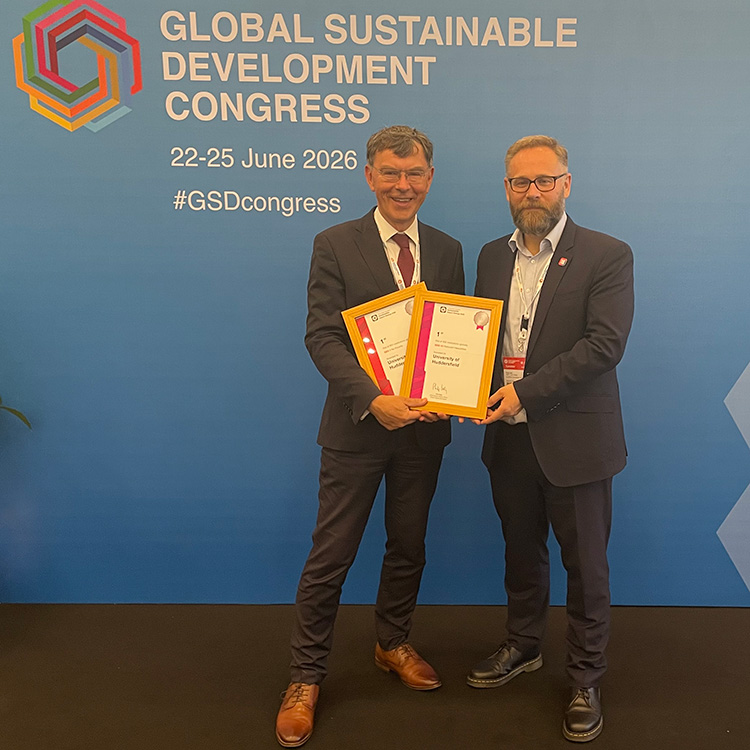
The university is in the world’s top 100 of universities in the following categories:
SDG 1 – No Poverty
SDG 7 – Affordable and Clean Energy
SDG 8 - Decent Work and Economic Growth
SDG 10 – Reduced Inequalities
SDG 11 – Sustainable Cities and Communities
SDG 17 – Partnership for the Goals.
SDG1 – No poverty
The university works to widen participation in Higher Education and to challenge poverty in a number of ways.
It offers extensive support to students from low-income families and underrepresented groups with an Access and Participation Plan. This includes a £1,000 scholarship for new undergraduate students from low-income families, and a financial hardship fund that helps with housing, utility bills, childcare, travel and food. Scholarships and support for students from low and low-middle income countries.
The Enterprise Team and the 3M Buckley Innovation Centre (3MBIC) support start-up businesses, with a particular focus on local SMEs to help with R & D, designing and prototyping of products
The university is also improving access to basic services locally, with the Get Set Goal and Restart a Heart programmes going out into the community to offer health checks and advice. The Podiatry Clinic is available for the public in the Daphne Steele Building, and the Emily Siddon Building hosts a Community Diagnostic Centre for patients referred on by their GP.
SDG 10 - Reduced Inequalities
The university is committed to reducing inequalities by widening access to Higher Education through targeted recruitment of underrepresented groups, and non-discriminatory admissions.
We actively promote equality through initiatives like the Athena SWAN and Race Equality Charters, inclusive student and staff networks, mentoring programmes, and our role as a Disability Confident Leader.
Our global research partnerships also help address inequality, including work with marginalised communities and social entrepreneurs.
In 23/24, 1,349 of our intake of new students were from families where neither parent had experienced Higher Education.
We also offer extensive support to students who lived in care before attending the university, as well as those students who are estranged from their families.
The University’s Access and Participation Plan (APP) sets targets for access to the University from underrepresented groups. As part of the APP process, there is measurement and tracking of the performance of these groups in the application process, including from Black, Asian and Minority Ethnic, female, disabled, white working-class male (and therefore underrepresented) students, and other groups including care-experienced students.