Scientists undertake tests of new chocolate formulation in Ghana partnership
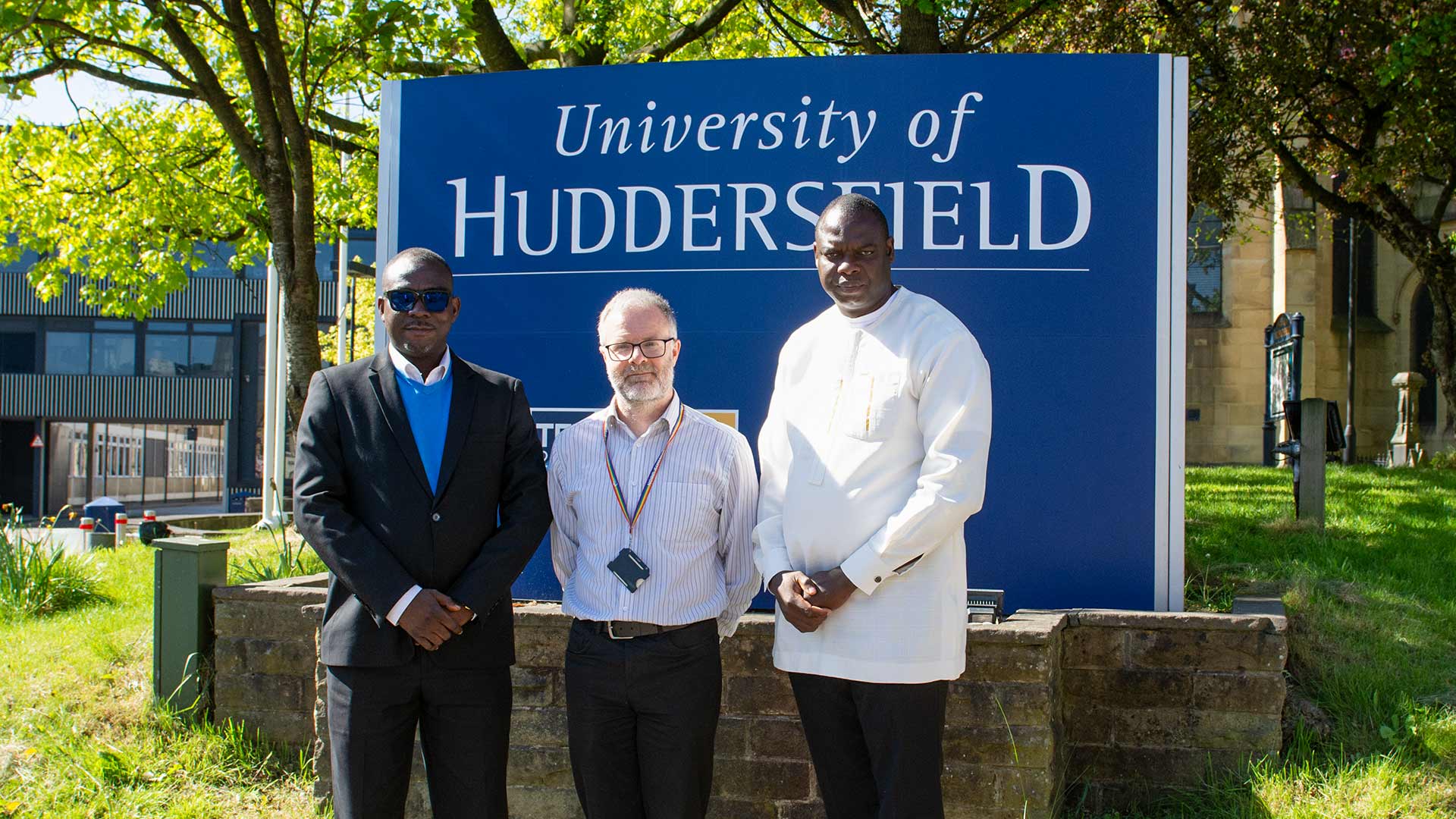
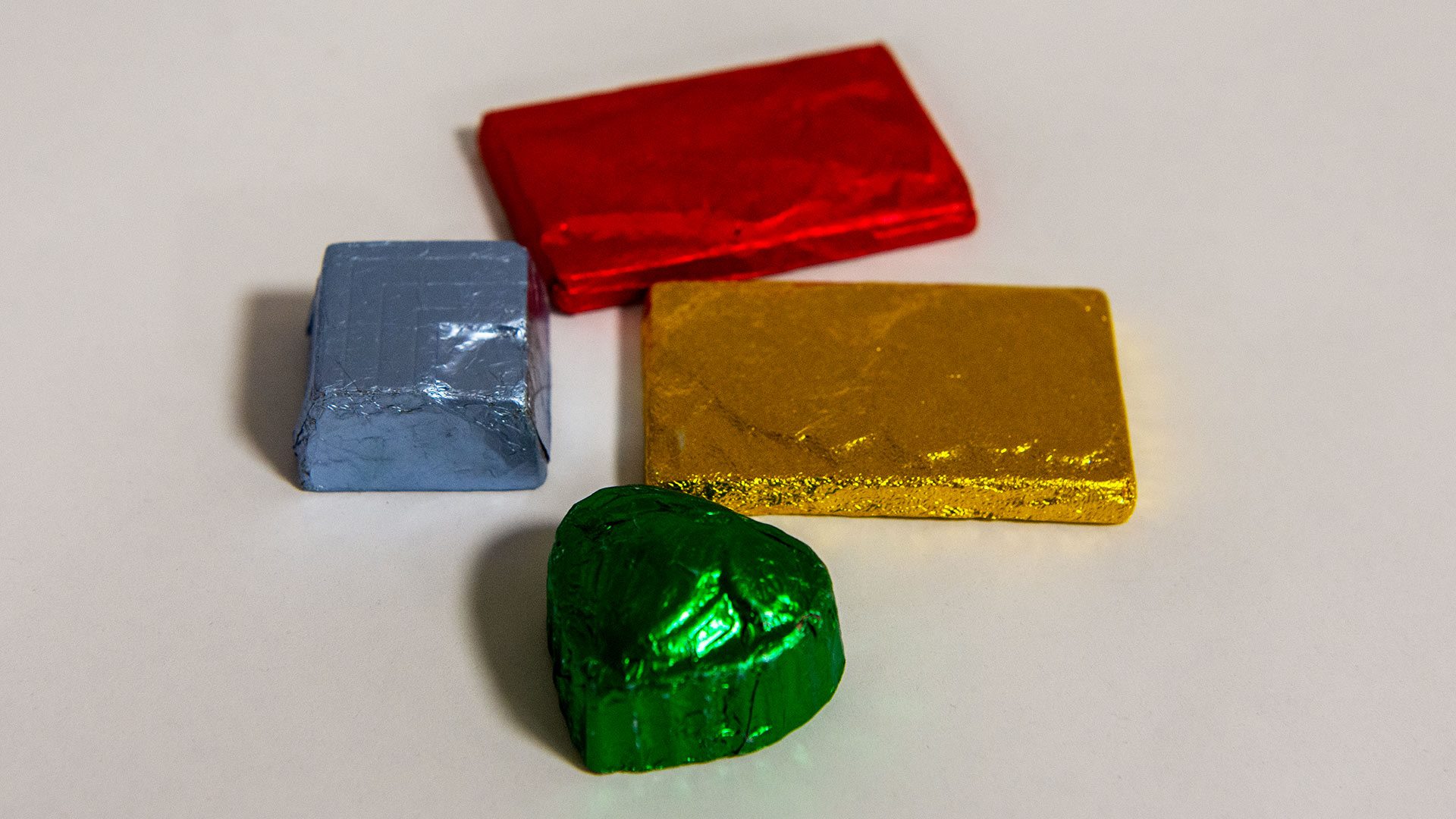
Scientists have carried out a series of final tests at the University of Huddersfield on a new chocolate formulation containing okra pectin as a sustainable substitute ingredient.
Professor Gordon Morris has been working with Ghanaian firm Cocoa Processing Company, alongside two local Ghanaian universities, on the two-year African Agriculture Knowledge Transfer Partnership (AAKTP).
The Professor of Carbohydrate Chemistry within the Department of Physical and Life Sciences welcomed visitors from Ghanaian universities, Kwame Nkrumah University of Science and Technology (KNUST) and the University of Health and Allied Sciences (UHAS), to campus in the final stages of the 24-month-long AAKTP.
The aim of the Partnership has been to find a sustainable alternative to soy lecithin, which is imported by the Cocoa Processing Company to be used as an emulsifier in its production of chocolate in Ghana.
The project is looking to utilise agrowaste from locally grown okra as a natural and cheaper source, while developing a process that can extract such plant pectins for use in the chocolate industry.
Due to the higher cost of importing soy lecithin, the project has the potential to lead to substantial savings on materials for the chocolate manufacturer.
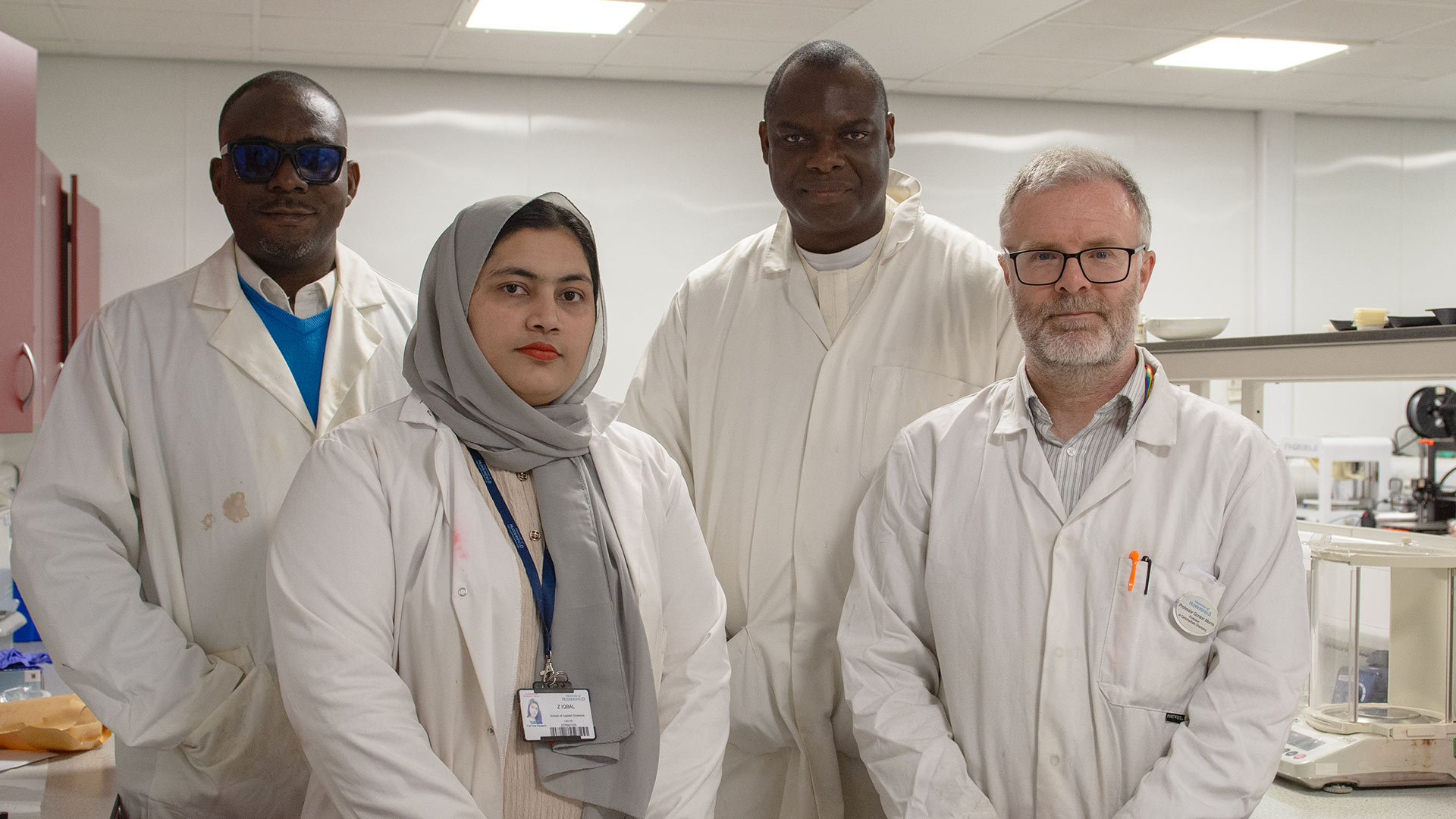
The latest visit saw Professor Jacob K. Agbenorhevi at KNUST, the Knowledge Base Academic Lead from its Department of Food Science and Technology, and Professor Fidelis Kpodo, Academic Supervisor from UHAS, work with Professor Morris to utilise specialised equipment available at the University of Huddersfield’s Biopolymer Research Centre.
The trio used High Performance Anion Exchange Chromatography (HPAEC) to determine the sugar composition of the extracted pectins and Differential Scanning Calorimetry (DSC) for information about the melting properties of the fat in the new chocolate formulation.
Professor Morris commented: “The project appears to be going well, and it was great to catch up with both Jacob and Fidelis. I am hopeful that we can continue to work together in the future.”
Over the course of the AAKTP, Professor Morris and Professor Alan Smith, a Professor of Biopolymer Science within the University’s Department of Pharmacy, have provided their expertise in analysing the pectin extracts. Using the laboratory facilities in Huddersfield, they have evaluated the extracts for their molecular weight, structural characteristics, thickening behaviour and emulsifying properties.
Knowledge Transfer Partnerships are government-funded programmes aimed at helping UK businesses improve competitiveness, productivity and performance. They are match-funded through national innovation agency Innovate UK – part of UK Research and Innovation – and are an opportunity for businesses to access academic expertise, drive innovation, and achieve lasting impact.
The AAKTP programme is modelled after the UK’s Knowledge Transfer Partnership scheme and also receives funding through Innovate UK. Its purpose is to support an academia–industry collaboration to translate research outputs into practical industrial solutions.