Holocaust docudrama 'Echoes of Justice' draws on Huddersfield research
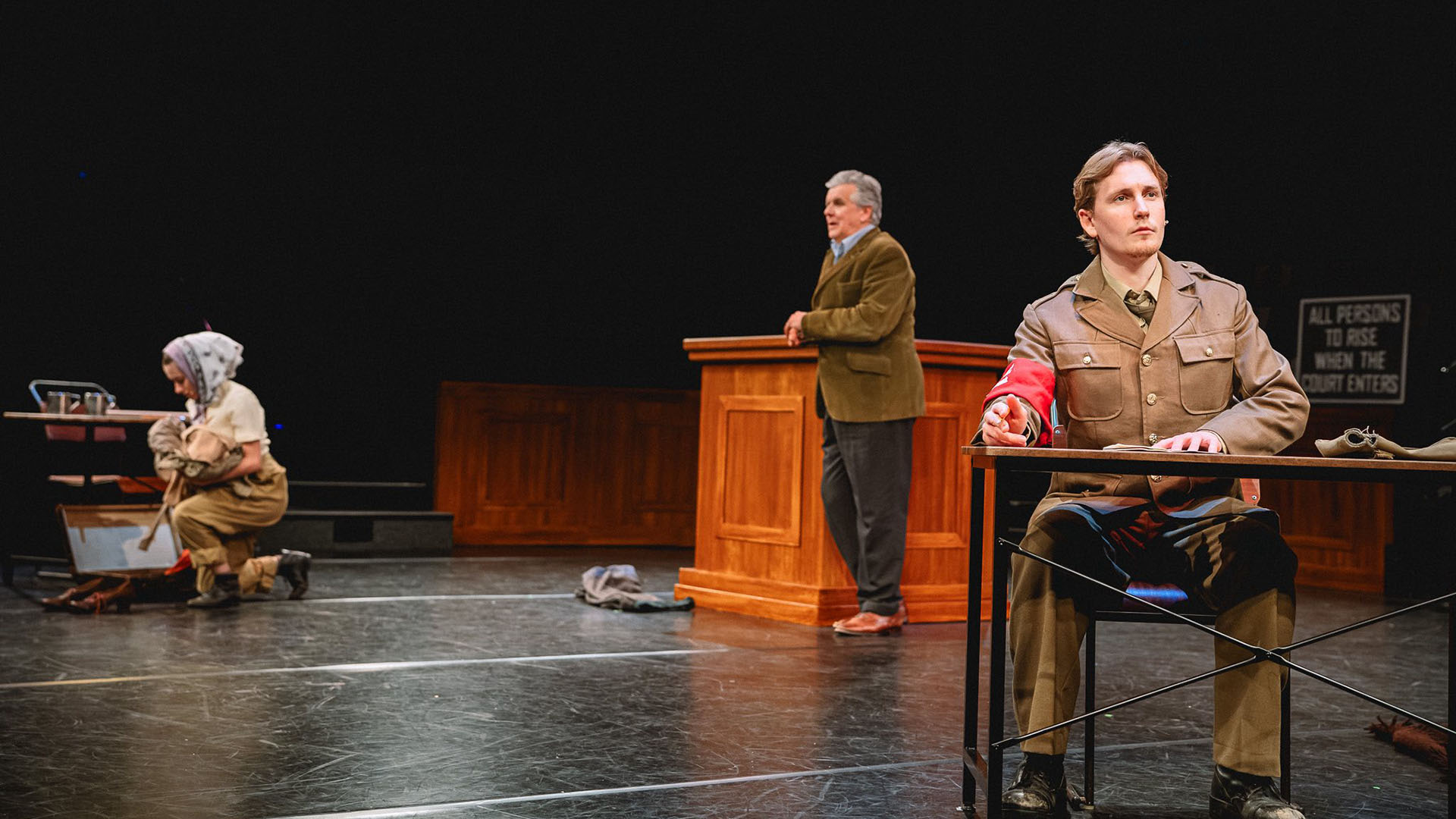
Research from the University of Huddersfield has helped to develop a powerful new piece of theatre docudrama that examines the aftermath of the Holocaust.
Echoes of Justice was performed at the New Vic Theatre in Newcastle-under-Lyme thanks to input from Dr Roxanne Taylor, lecturer in English and linguistics expert.
Drawing on direct testimony from the trials of those prosecuted for war crimes at the Belsen concentration camp, the play examines how language, translation and memory shape the understanding of truth and justice.
Taking place over different timelines, Echoes of Justice weaves together a survivor of Belsen, a young military policeman who helped to liberate the camp in April 1945, and current-day war crimes investigator. The play brings research-informed quality Holocaust education to underserved audiences in the North of England and is transforming the artistic practices of the social theatre company, New Vic Borderlines.
Dr Taylor channelled her research into an article, ‘Language use by victims, perpetrators and observers at the 1945 Belsen Trial’, published in The Journal of Holocaust Research in 2025.
“After completing my PhD in Old English linguistics, I decided to start researching language context and language change after the Holocaust. My new research focus started with personal interest and a visit to Poland but fits well with the strengths of the Centre for Archaeology and Holocaust Centre North here at Huddersfield,” says Dr Taylor.
"Witnesses used words like ‘blokowy’, ‘chef du Block’ and ‘kapo’ for prisoners who performed many tasks for the Nazis in the camps. These terms were new and specific to the Holocaust. Not all these were picked up by the lawyers and investigators, who invented their own German and English terms for what they learned about the camp system.
“The Nuremburg trials are very familiar, but I wanted to look at how the Belsen trials started this process as they began before Nuremburg and were largely overseen by the British.”
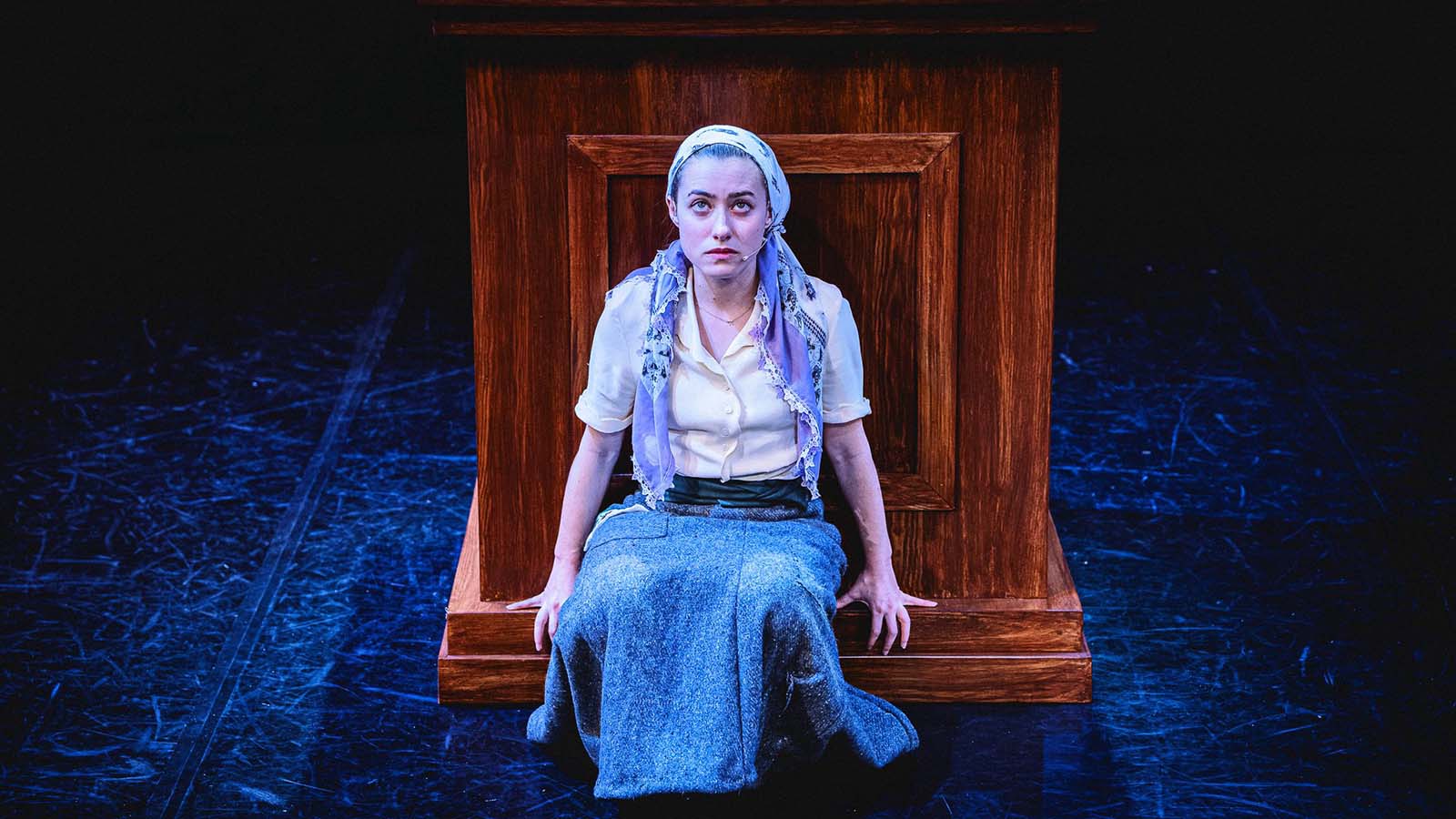
Esther
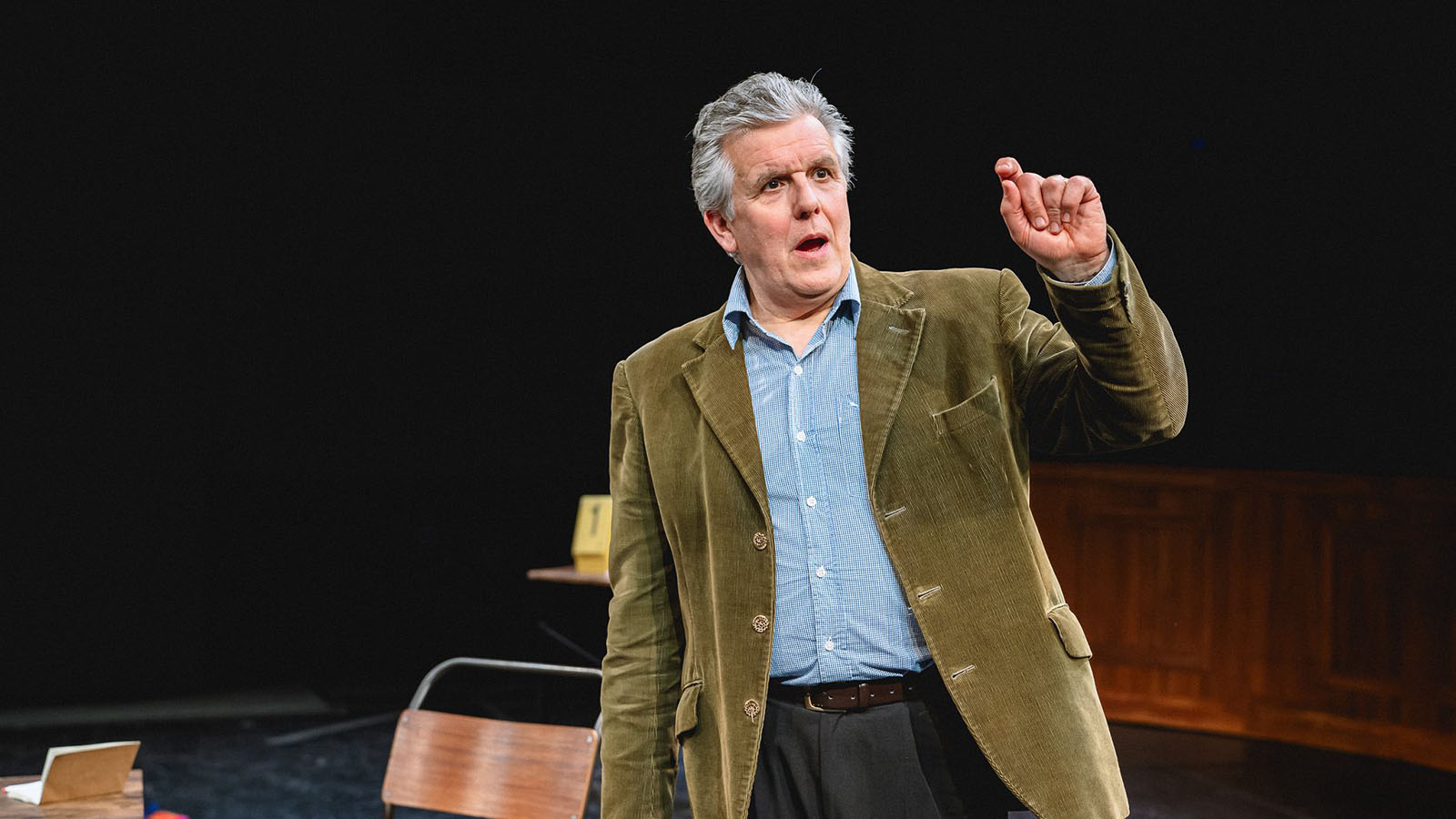
Howard
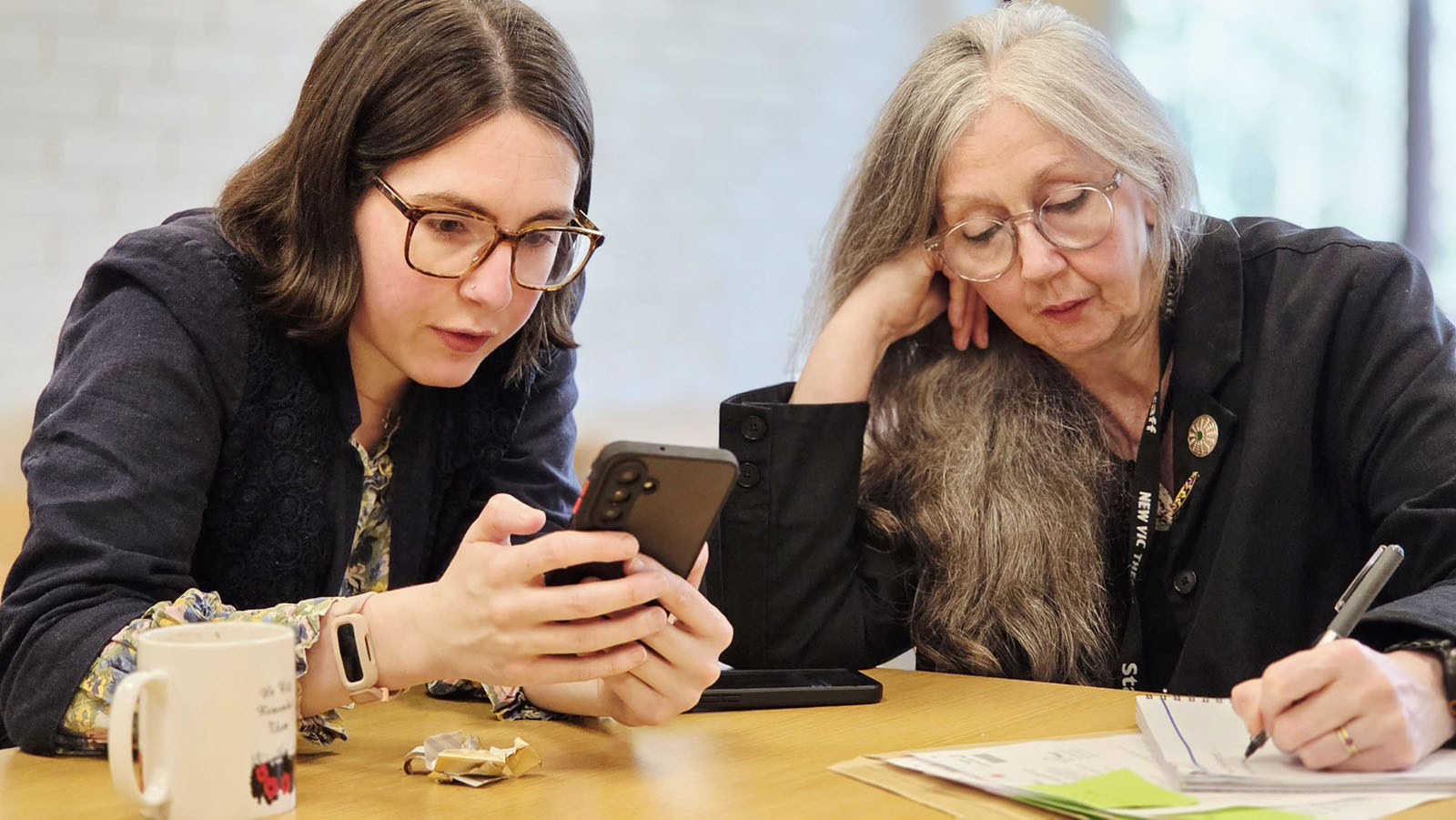
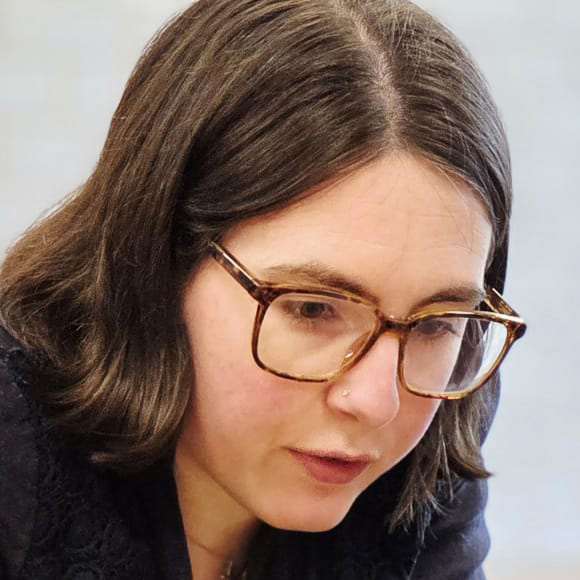
Dr Roxanne Taylor and Sue Moffatt
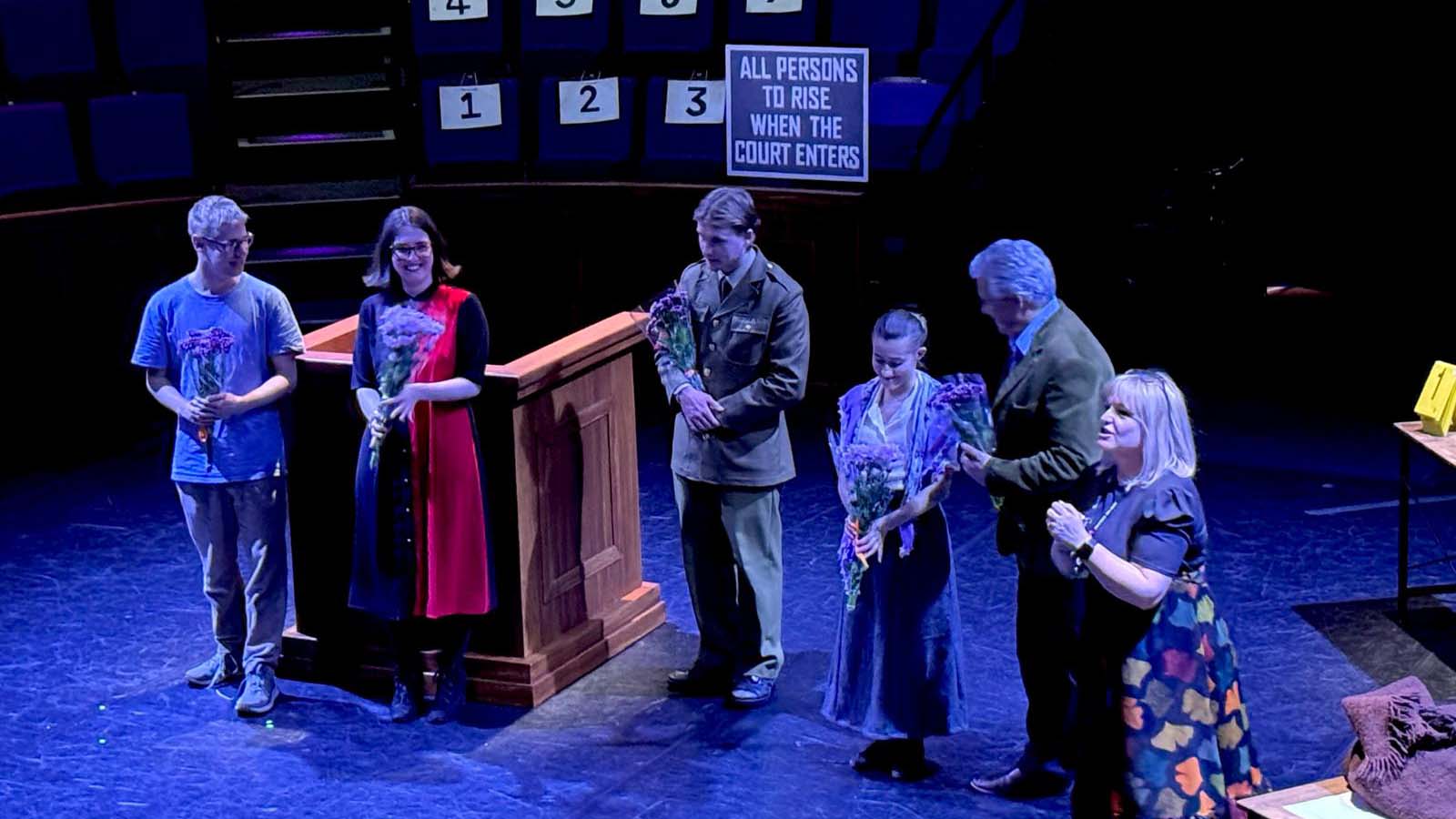
The cast and those behind the play take a bow
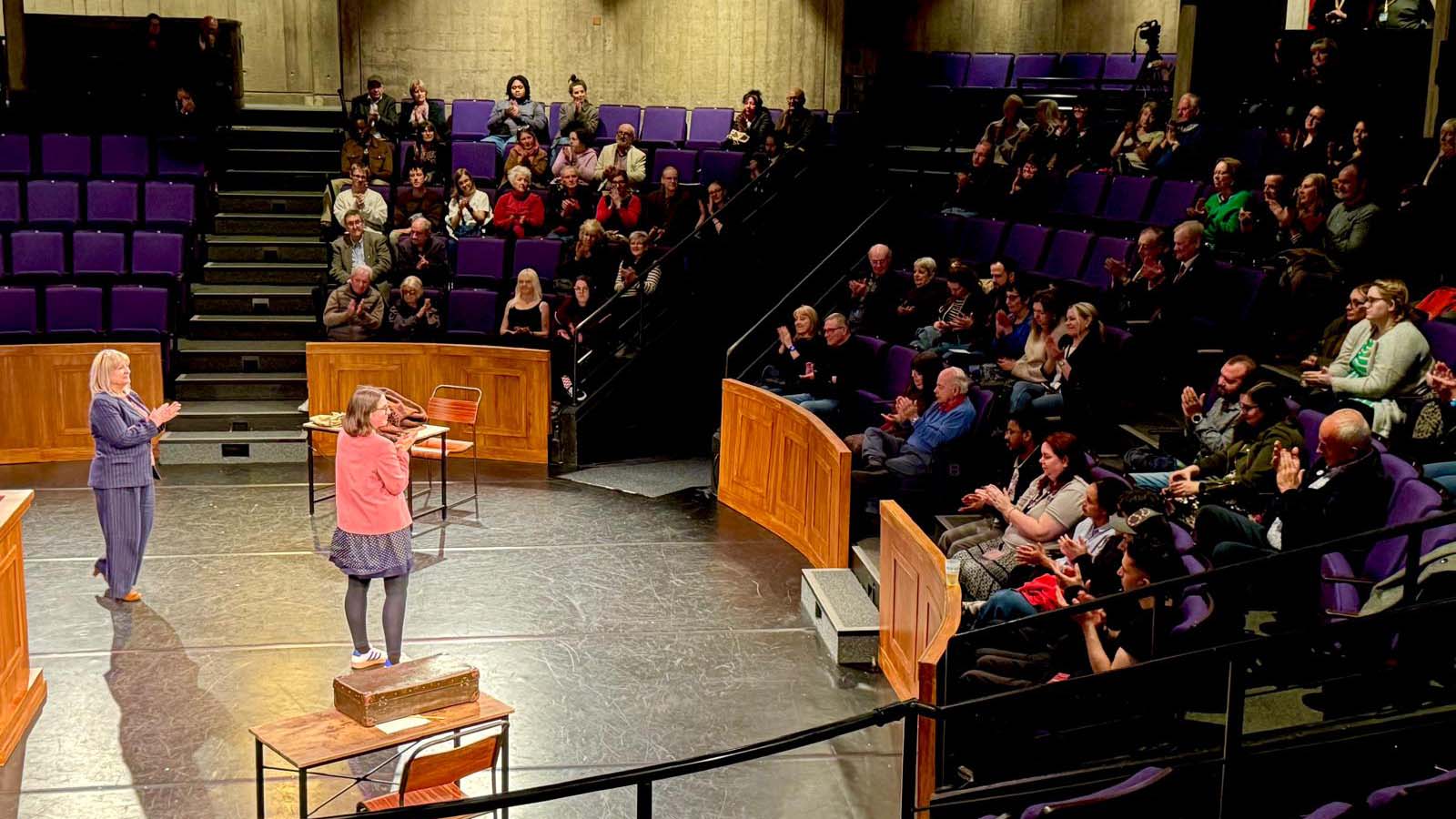
Dr Taylor discusses the play with the audience.
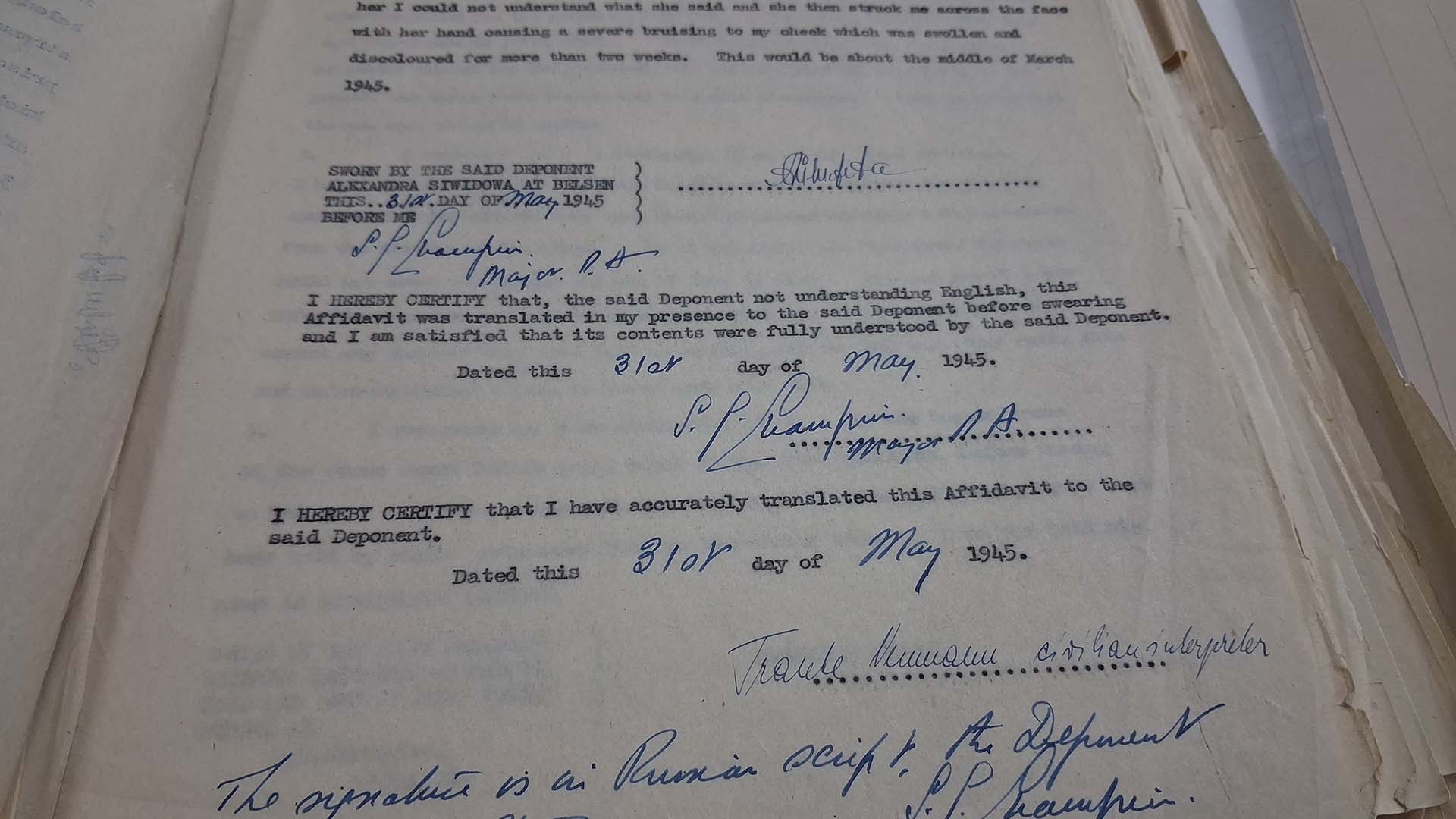
Part of an affadavit from the Belsen trials
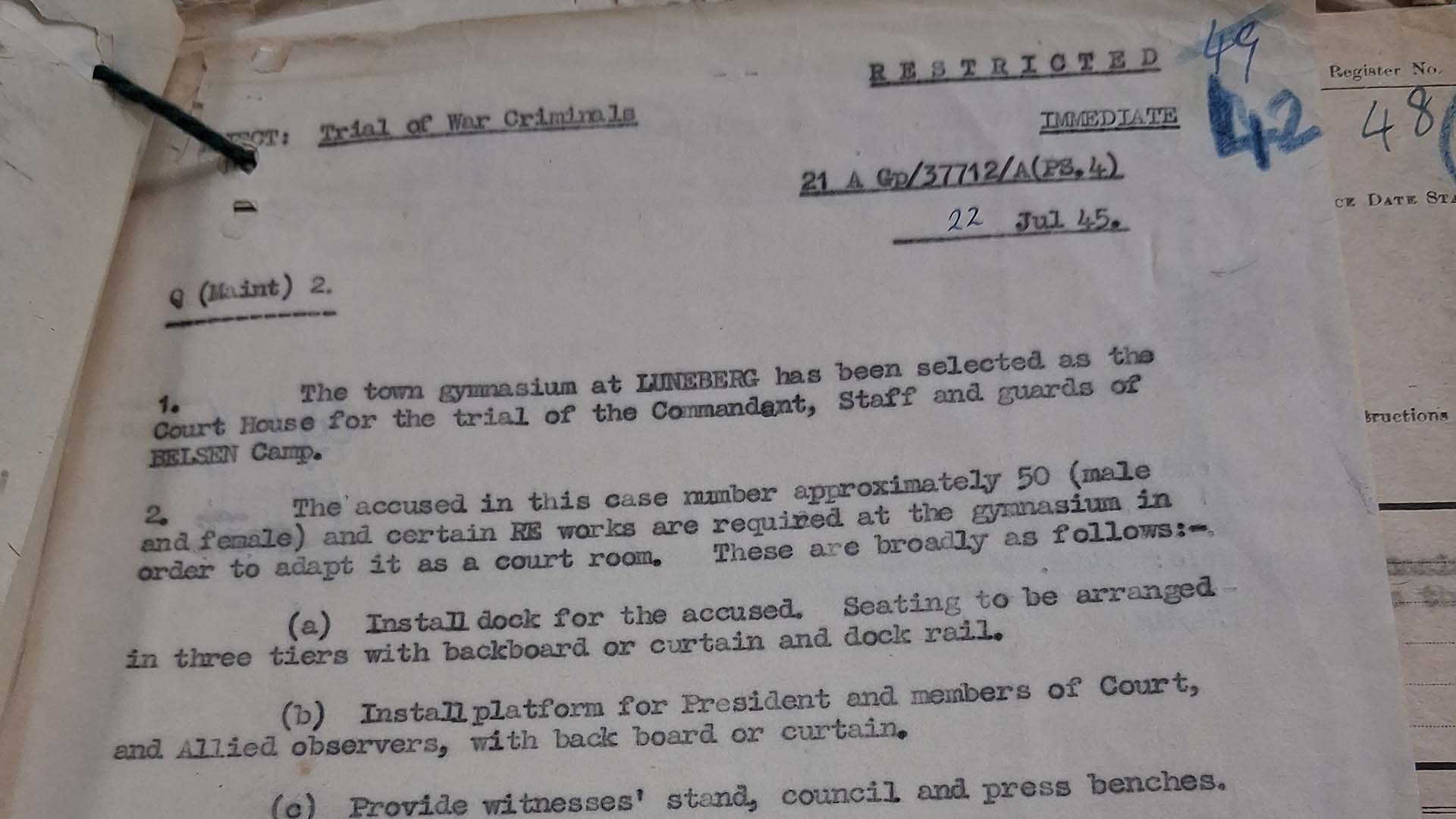
Part of an affadavit from the Belsen trials
Dr Taylor contacted writer and director Sue Moffatt and the theatre, who had previously collaborated with Huddersfield’s Professor Caroline Sturdy Colls on a play about the 1995 Srebrenica Massacre.
An expert in forensic archaeology specialising in uncovering Holocaust evidence at sites including Treblinka, Professor Sturdy Colls had worked with the theatre while at the University of Staffordshire.
New Vic Borderlines’ track record of research-driven drama led Dr Taylor to apply for a grant from Huddersfield’s Impact Accelerator Fund, using their creative expertise to bring about educational and attitudinal change towards Britain’s role in the history of the Holocaust, antisemitism, and justice, as well as building the repertoire of the company
Parallels with more recent war crimes
“In the early stages, Sue and I discussed different themes and dynamics in the historical record, and I shared material I had studied at the National Archives such as pre-trial affidavits or testimonies. In addition, some of the dialogue in the play is verbatim from the trial itself, which was transcribed. These records are also kept at the National Archives in Kew.
“The characters are Leonard, based on a real military policeman named Len Higgs who I found in the archives. Esther, a conglomerate figure is based on the civilian interpreters who had survived the camps, and there is Howard Tucker CBE. Howard is very much a real person, a Welsh policeman who volunteered to go to Bosnia to investigate war crimes there in the 90s, so the play cleverly weaves in a more modern angle and invites audiences to reflect on how history, including genocide, repeats itself.
Curiosity from people with links to trials
“The play is aimed at secondary school-age children, and three different schools from the Potteries area attended. We also had young people from the local RAF Air Cadet squadron, and a local YMCA group as well as older members of the local community who were curious.
“We had an interesting reaction from some older audience members, who had parents or relatives who were involved in the liberation and relief of Belsen and felt inspired to share those stories after the performance. Lots of British Army and civilian units like the Red Cross were at Belsen not long after it was liberated, so there are lots of family connections to that the play tapped in to.”
Plans are afoot for the play, which runs to about 45 minutes, to be performed in Huddersfield as well as returning to Newcastle-under-Lyme soon with workshops for audiences to reflect on questions of language and justice.