Lord David Blunkett speaks of importance of Higher Education at annual lecture
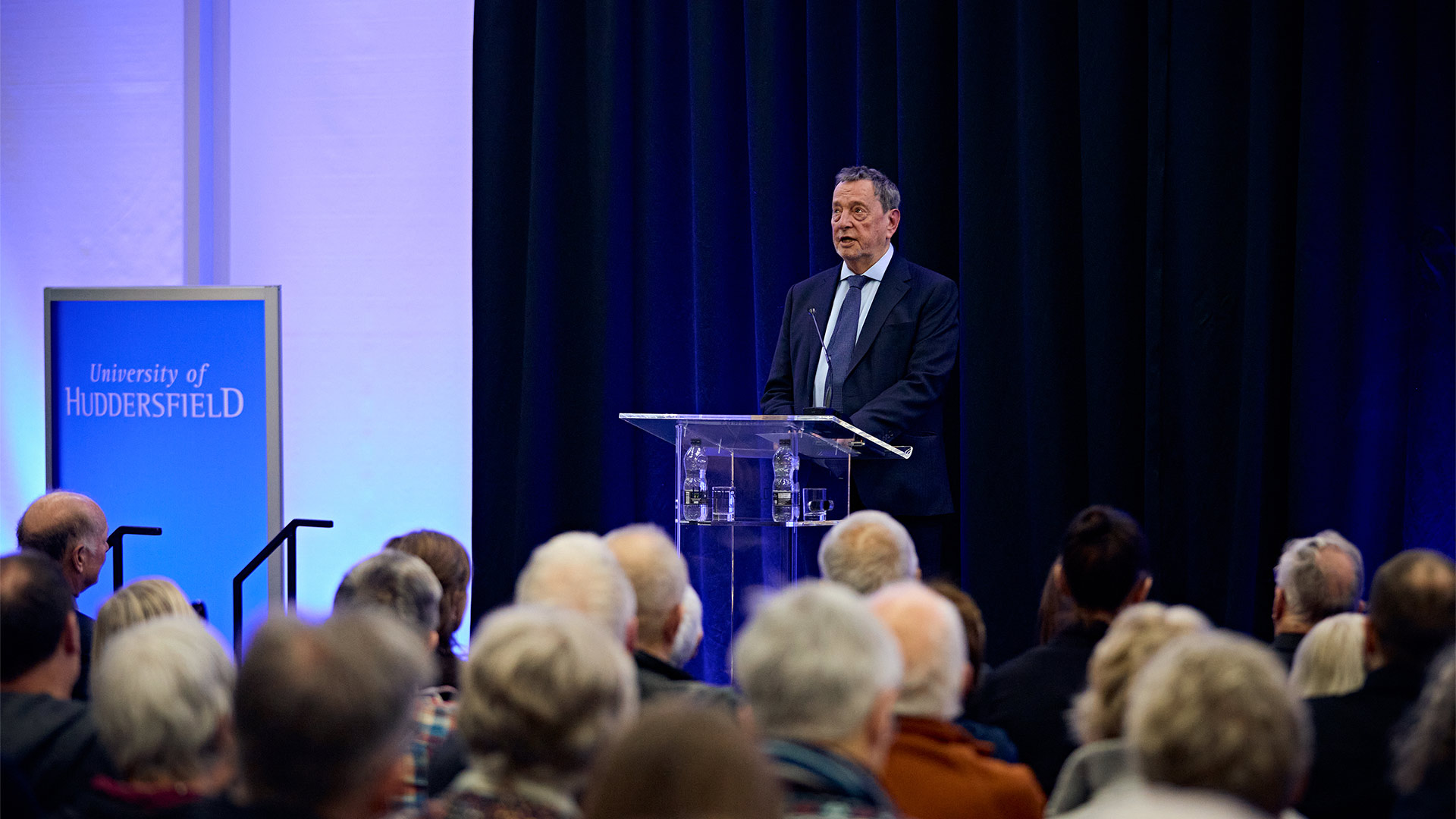
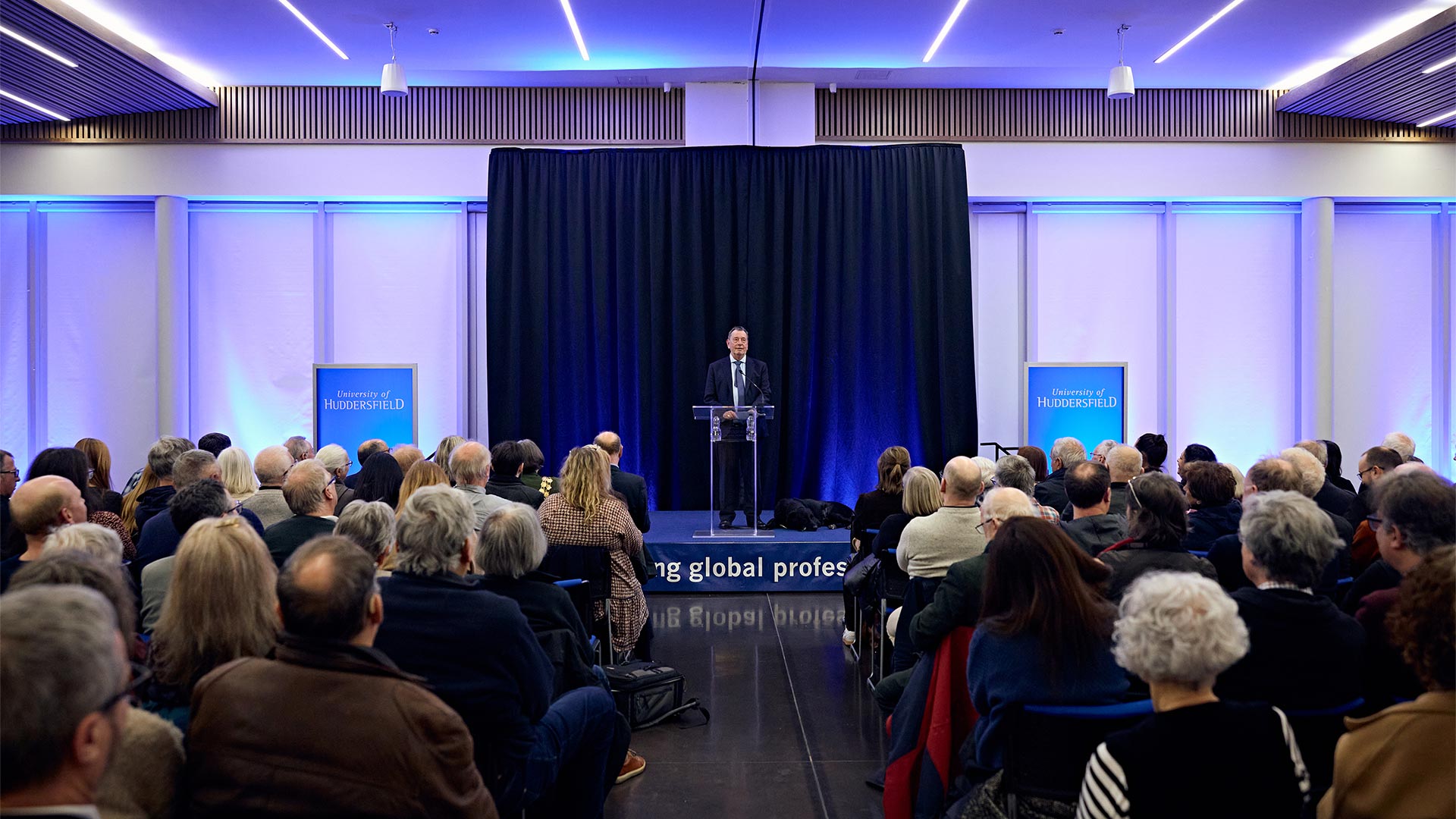
Notable politician Lord David Blunkett spoke about the importance of Higher Education, adapting to the age of AI, and the current political landscape in a wide-ranging lecture given at the University of Huddersfield.
Lord Blunkett, former Secretary of State for Education and Employment, was speaking at the University’s annual Harold Wilson Lecture series held in honour of the Huddersfield-born former Prime Minister.
In his talk, entitled From the General Strike to the Age of AI: Harold Wilson and Labour’s Enduring Challenge, Lord Blunkett also reflected on Wilson’s leadership and the lessons that can be learned from history.
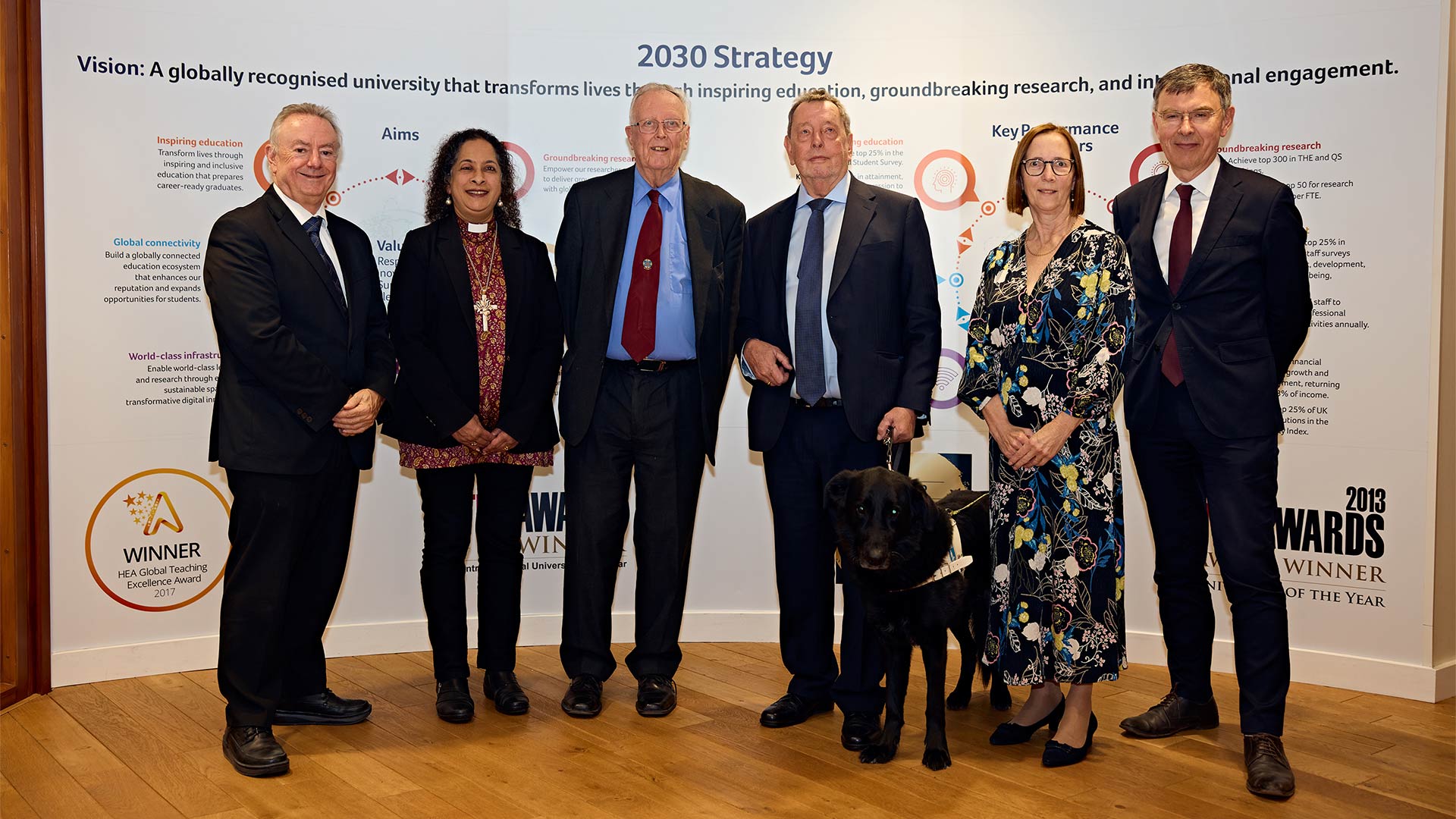
After being introduced by the University’s Vice-Chancellor, Professor Bob Cryan, Lord Blunkett frequently returned to the theme of connectivity, referencing his studies in teacher training at the University in the 1970s and later receiving an Honorary Doctorate from the University in 2017.

He spoke about Harold Wilson’s “vision of the future of Britain that took us forward with reform and modernisation” and the importance of a university education to that vision.
“Harold understood that education was fundamental to the liberation of talent, to being able to move from a pre-industrial situation to a new era where people were learning entirely new skills, and where we would need the vast number of people to be able to access either technical education or academic education that led to a job,” he said.
“There are a lot of attacks these days on universities. Lots of people try to pretend that it's either vocational, technical education on the one hand or academic on the other, and of course, it isn't.”
He also went on to praise the Open University, which was set up in 1969 during Wilson’s premiership, and is known as one of his greatest achievements, with both men having received Honorary Doctorates from the institution.
Alongside Wilson’s “great efforts to shift our economic thinking and to prepare us for the technological age of the future” was the establishment of the OU. He added: “The Open University was the breakthrough in terms of breaking out from the minority getting Higher Education into opening access to the many, and this is what the University of Huddersfield is also all about. It's about the opportunity that others have always taken for granted, but until the emergence of the Open University, just a handful of people were allowed to get on the escalator.”
He continued to refer to Wilson’s vision for Britain at the time of his first General Election win, adding: “He managed it, and he managed it with, as he said, back in 1964, a vision of the future of Britain that took us forward with reform and modernisation. The “white hot heat of technology” may have been a slogan, but it was an indicator of a way of thinking about Britain for the world of tomorrow.”
Bringing this right up to date, he referenced the age of Artificial Intelligence, saying: “I think people are wrong to believe that AI will automatically destroy jobs. It will change jobs dramatically. But we need to prepare for that by giving people the progression and lifelong learning that allows them to take advantage of it, rather than being victims of it.”
Of the current political landscape, he spoke of the Labour Party needing to “reach out once again and persuade people we are the party of Britain”, referring to Wilson as “one of our great, successful Labour leaders”. He concluded the well-attended lecture by saying: “You can't live in history, but you can learn from it.”
Lord Blunkett, who was born with a rare genetic condition that left him blind, has had a long and influential career in public service, having been elected as the Member of Parliament for Sheffield Brightside in 1987, a seat he went on to hold for 28 years.
He served as a senior Cabinet member for eight years from the late 1990s onwards, holding key roles that included Secretary of State for Education and Employment and Home Secretary, before being elevated to the House of Lords in 2015.
The annual lecture series is organised jointly with the Diocese and is named in honour of the Huddersfield-born former Prime Minister who won four General Elections, spending around eight years at 10 Downing Street in total.