University’s partnership in Kenya graded outstanding by Innovate UK
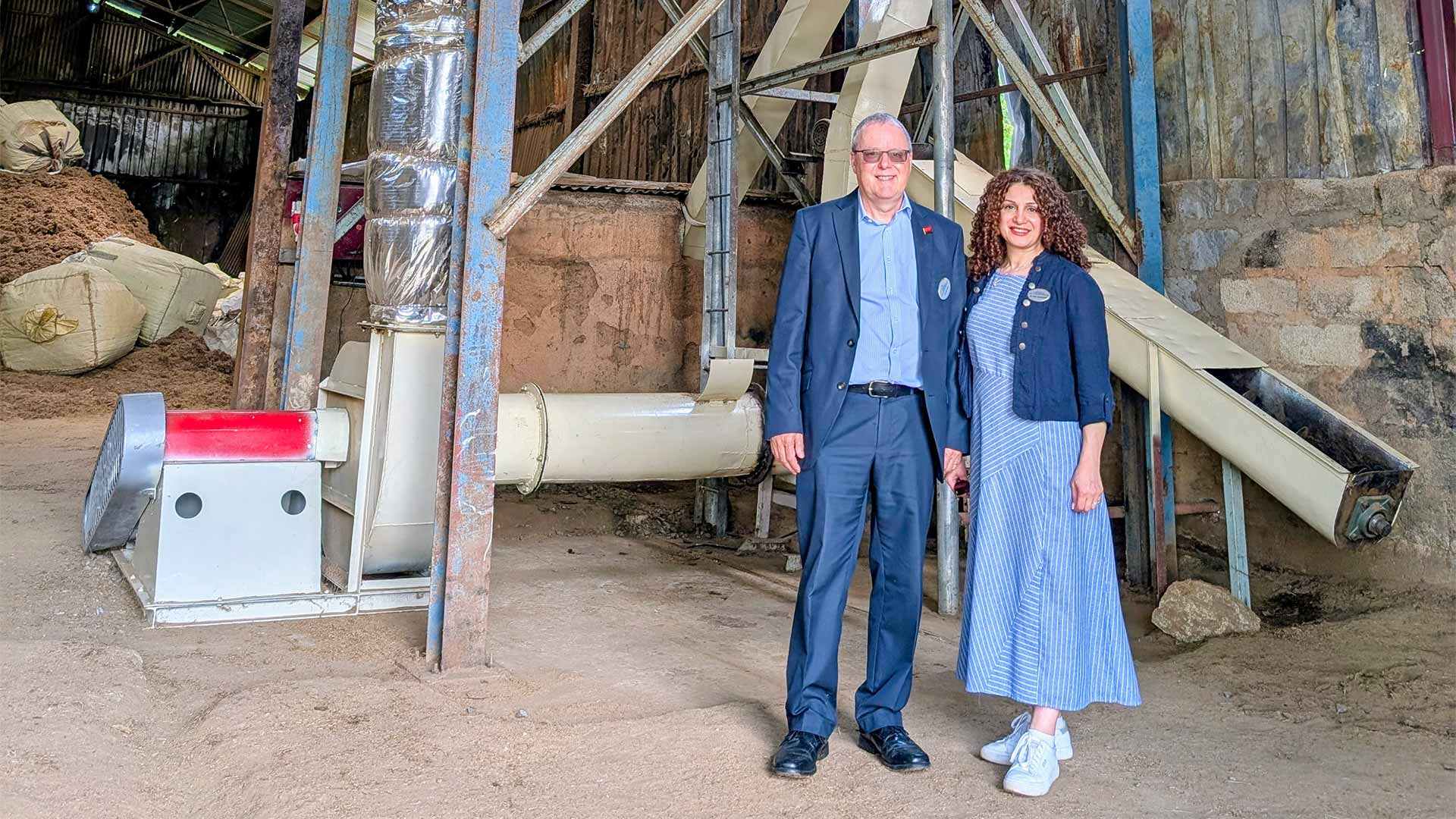
A research partnership in Kenya to innovate how sugarcane waste is transformed into a clean cooking fuel has been graded outstanding by Innovate UK.
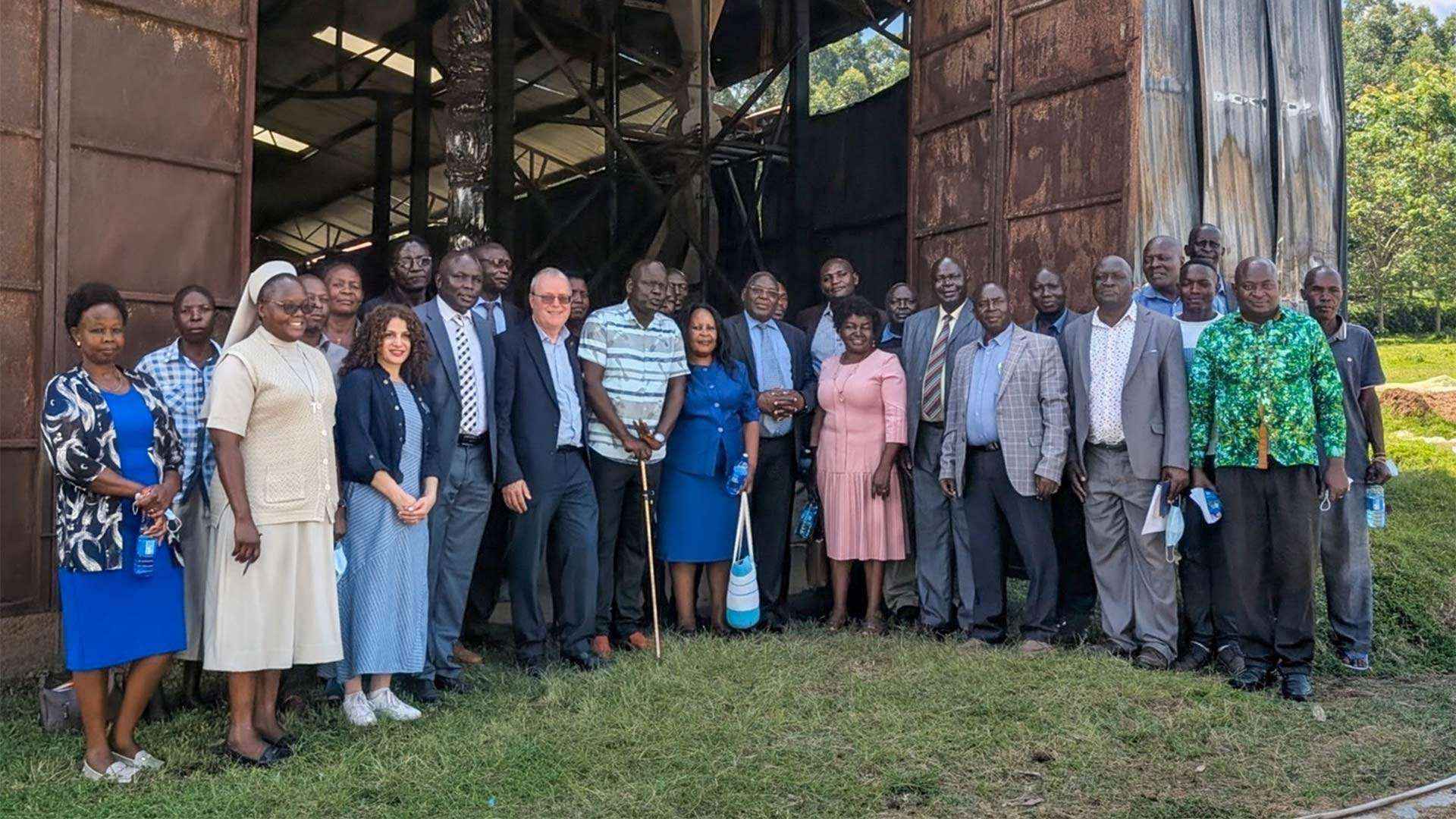
Professor John Allport and Dr Gina Javanbakht of the University’s School of Computing and Engineering, worked on the drying technology over two years with Kibabii University and local company Carbon Footprint Ltd in western Kenya.
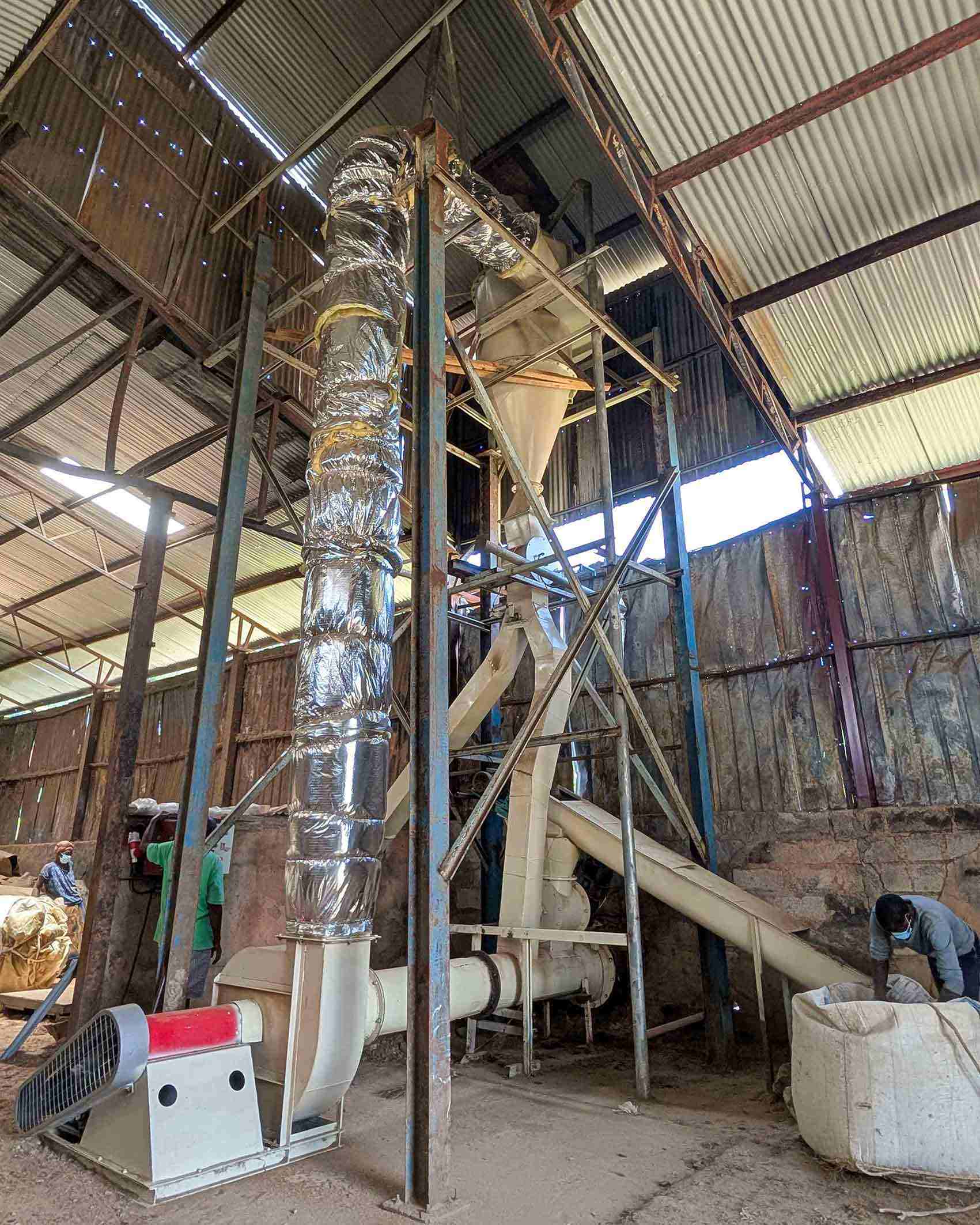
This resulted in an eight-metre-tall piece of machinery that is capable of drying sugarcane waste – or bagasse –, which has since gone into production commercially.
The work is part of the African Agriculture Knowledge Transfer Partnership (AAKTP) pilot programme modelled after the UK’s own KTPs and funded by Innovate UK, part of UK Research and Innovation.
This particular AAKTP was set up to develop a sustainable technology to process what is an environmentally-damaging agricultural / food waste product and to improve the livelihoods of local rural communities.
Kenya’s sugarcane industry generates vast amounts of waste bagasse, the fibrous material left after the milling process. This waste is often dumped on land around sugar mills and left to rot, releasing methane and other greenhouse gases, as well as polluting local waterways.
Companies like Carbon Footprint operate near to these sugar mills and are able to make use of the bagasse by drying it in the sun and forming it into briquettes, which is then sold as a cleaner and cheaper alternative fuel for cooking.
However, drying wet bagasse in Kenya’s tropical climate is challenging and the only existing machinery was expensive to import, often not suitable for bagasse and therefore prone to catching fire.
The partnership has designed and developed a dryer specifically engineered for processing bagasse, relying on locally available materials, tools and skills, meaning it is not only technically effective, but also affordable, replicable and sustainable.

Professor Allport, who is a Professor of Engineering, lead on the University’s Energy Integration Lab and member of the University’s Centre for Energy, Environment and Sustainable Engineering, commented: “It has been a real experience developing the relationship with the team in Kenya, with all partners learning a lot about each other and gaining invaluable experience from each other. The development of a local solution, using local expertise and capabilities in a contextual manner, has led to a significant step toward translating research outcomes into real-world impact, providing both economic and social benefits.”
Such is the success of the resulting drying machinery, a patent application is pending, and a joint company has been established to manufacture and sell the dryers commercially to other briquette producers, generating further employment opportunities and expanding the local clean energy market.
Profits from this new venture will be shared between the original firm Carbon Footprint Ltd and the academic partners, with the University of Huddersfield’s share being allocated to fund bursaries for Kibabii University students to pursue further studies in Huddersfield.
In addition, work is already underway on the design of a larger-scale dryer, developed in response to feedback from potential customers and industry stakeholders, which demonstrates the sustainability and commercial viability of the technology developed via the project.
For more on Knowledge Transfer Partnerships at Huddersfield
Knowledge Transfer Partnerships are government-funded programmes aimed at helping UK businesses improve competitiveness, production and performance, part-funded through Innovate UK. The programme involves a collaboration between an organisation, nominated academic mentors from the University and a recent graduate.
Innovate UK is the country’s national innovation agency, which supports business-led innovation in all sectors and technologies, helping businesses grow through the development and commercialisation of new products, processes, and services.
An outstanding grading represents the top recognition awarded, reflecting exceptional achievements in embedding new knowledge, driving business growth, and creating lasting impact.
If you’re in the HE sector or are a business interested in partnering with the University of Huddersfield on a collaborative funding application, please get in touch via research.services@hud.ac.uk