Students train with applied drama techniques for dementia nursing
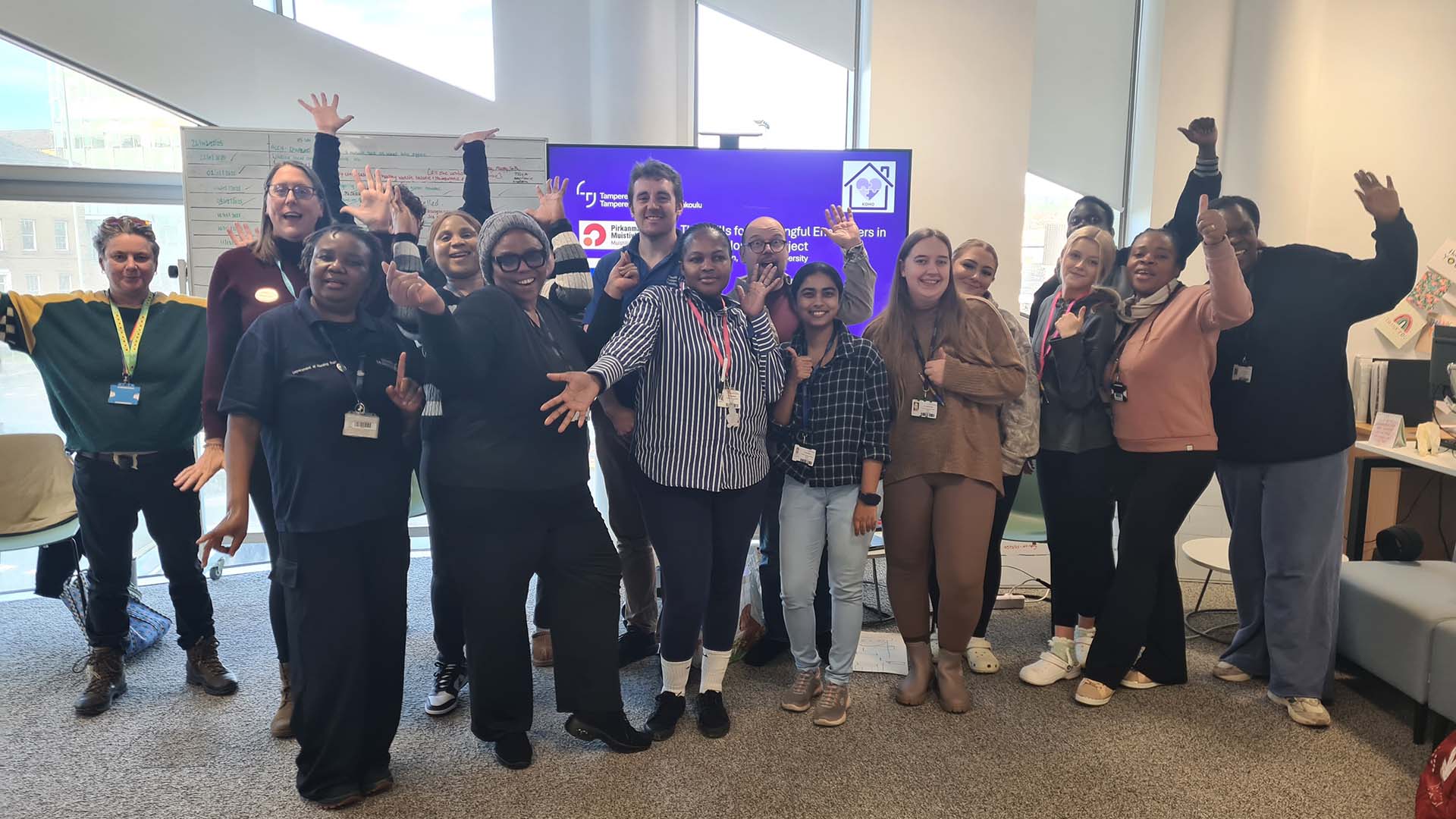
The University of Huddersfield has started a project that aims to enhance expertise in nurses working with people with dementia by the use of Applied Drama techniques.
Nursing lecturer Laura Hawley has applied her ongoing doctorate into active training techniques and applied drama in a series of workshops with students and staff to train undergraduate nurses studying dementia care.
Laura’s background was in the performing arts as a teacher, lecturer, examiner and practitioner before she moved into mental health nursing.
Specialising in actor training and applied theatre – the use of drama and theatrical techniques in non-traditional settings – Laura is working with current undergraduates including those placed in Get Set Goal.
Part of the University of Huddersfield’s Health and Wellbeing Academy, Get Set Goal is an innovative community health and wellbeing service which works with local agencies to help address health inequalities in the local area. The students have put their training into practice, both on campus and with local dementia charities.
Following workshops at the University of Chichester and the University of Portsmouth, and a workshop delivered to local dementia charity Gwennie’s, Laura’s group showcased and explored innovative approaches to nurse education in dementia, as well as in communication and person-centred care, using applied drama, actor training techniques and puppetry.
“The work was of real insight and benefit to our students,” says Laura. “Students commented on how the techniques used are transferable across all healthcare education, but the insight into dementia was incredible.
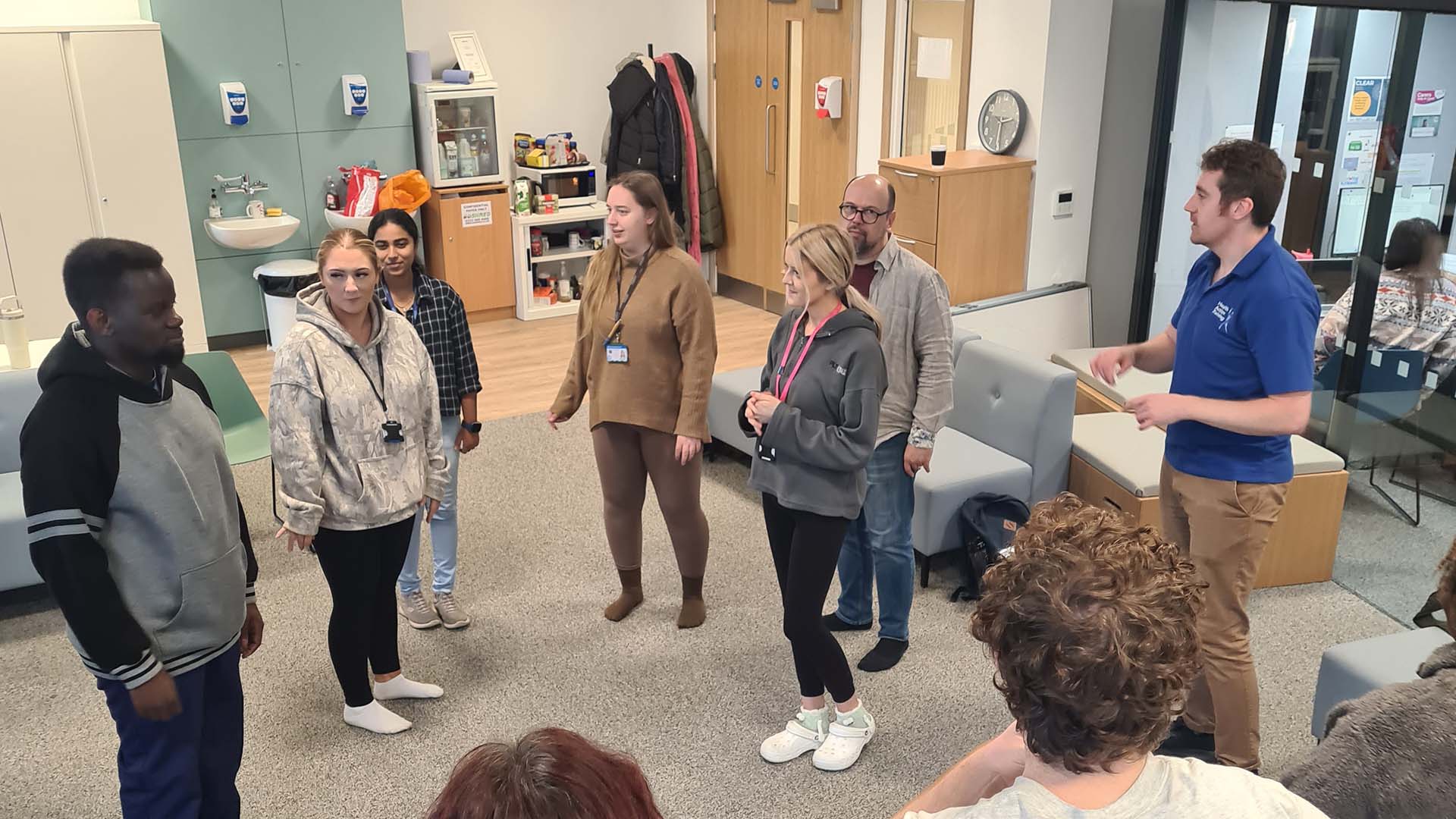
“We are leading the way in exploring innovative and exciting new approaches to nurse and health education and students and staff alike can benefit. This project will result in publication, it is a wonderful collaboration that plans to grow and develop.
“What we do is very much about using actor training and applied drama techniques in the teaching of nursing, not bringing in drama students. The aim is to embed these techniques in the teaching of nursing, and across all health-related courses.
“Using these techniques can really change the way mental health and dementia nursing is taught, and can really enhance the curriculum. These scenarios we work in with the students are person-centred and focus on really communicating with the patient.
“Now we have the dementia part, teaching that is the first of its kind, which is a specialist area but this method of teaching using applied drama techniques we feel is transferable across nursing and other health-related courses.”
Aiming to address a need for dementia nursing and care
Laura is hopeful that this innovative approach to training for dementia care can begin to address a gap in the provision of teaching it, with dementia care a key part of the NHS Long Term Workforce Plan.
“There’s a rehearsal process for actors, during which they become self-aware,” she adds, “There is a parallel with what we do, in that it is about awareness of your own communication, your own styles, how you come across and how you speak. The level, the tone, the volume of your voice, how you physically present yourself and what the impact of that is are all factors.
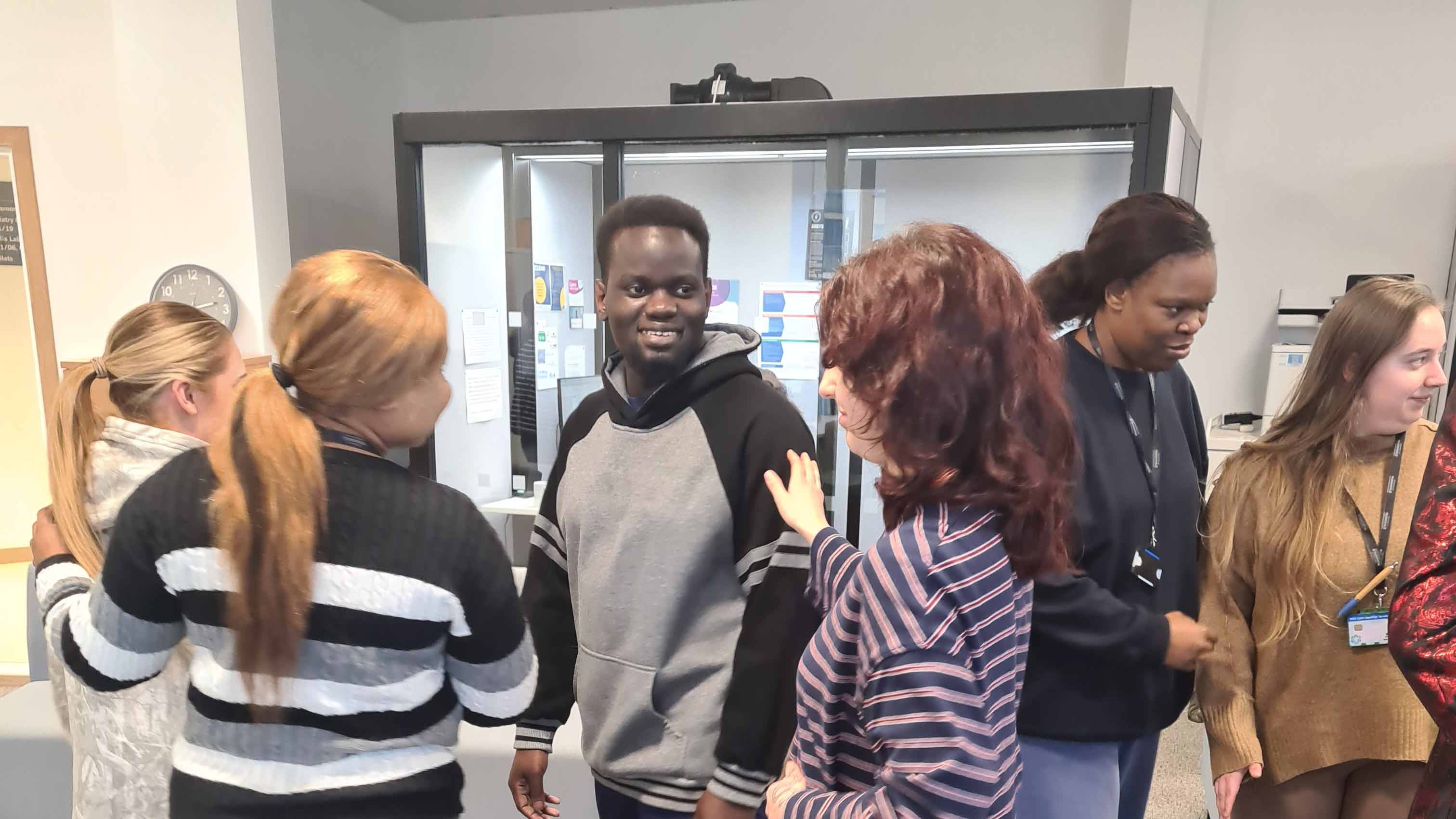
“But 80 percent of our communications are non-verbal, so confidence is important. We have seen a lack of confidence in how to communicate in our students, which this is addressing. We lose a lot of nurse and healthcare professionals due to burnout that is connected to confidence, so it is something that needs addressing while our students are still learning.”
Students from the university have also gained valuable experience from placements with Gwennie’s, a dementia charity based in Slaithwaite, around six miles from the campus. Gwennie’s runs a weekly Memory Café in the village, a safe social space with the chance for patients or their families to meet with health professionals.
“Quite a few businesses in Slaithwaite look out for their customers or visitors who have dementia, and we have been involved with Gwennie’s in these weekly sessions at the Waterhead Café since the start of this project. Our students have really benefited from working with Gwennie’s, and it’s easy to see how the patients, and their carers, benefit too.”
The project has also involved collaborations with the universities of Chichester and Portsmouth, as well as Tampere University in Finland.
Partaking in the research are:
- Riku Laakkonen (University of Tampere - Finland)
- Laura Hawley (Lecturer Nursing MH and Applied Drama researcher and practitioner-University of Huddersfield)
- Dr Karl Tizzard-Kleister (Co-founder and Head of Research: Health Action Training- Ireland)
- Dr Matt Smith (Reader in Applied Theatre and Puppetry - University of Portsmouth)
- Dr Gayle Booth (Skills Educator and Dementia specialist and author -University of Huddersfield)
- Maipe Dupe (Skills Educator Nursing - University of Huddersfield)
- Jo Odams (Senior Skills Educator Mental Health Nursing - University of Huddersfield)