Flagship research group at University delivers practical clean energy solutions
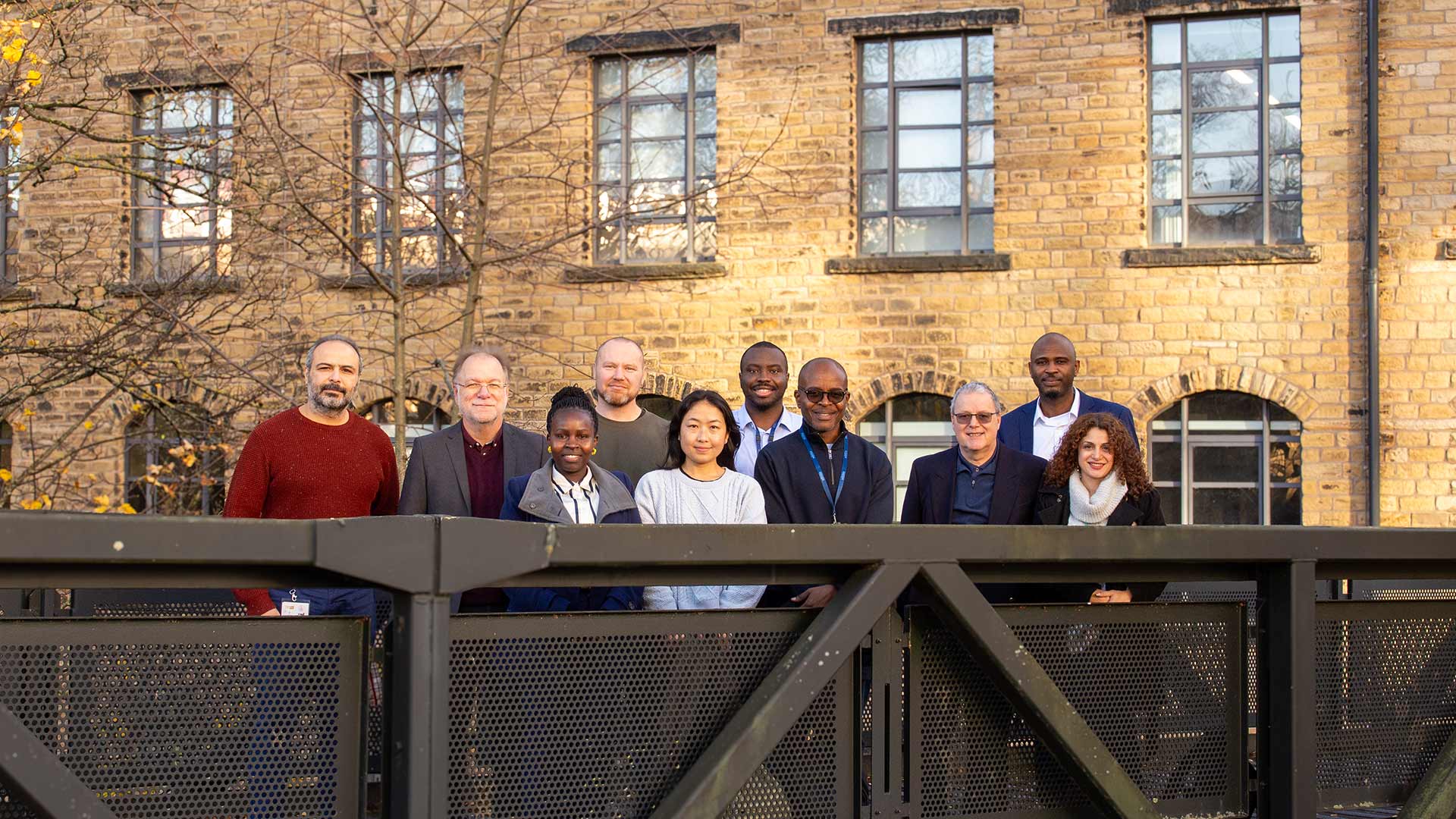
A flagship interdisciplinary research group at the University of Huddersfield is delivering practical solutions for the global clean energy transition.
Founded three years ago, the Energy Integration Lab (EIL) was created under the broader vision of the University as a Lab and brings together expertise from the Schools of Computing and Engineering, Applied Sciences, and Business, Education and Law.
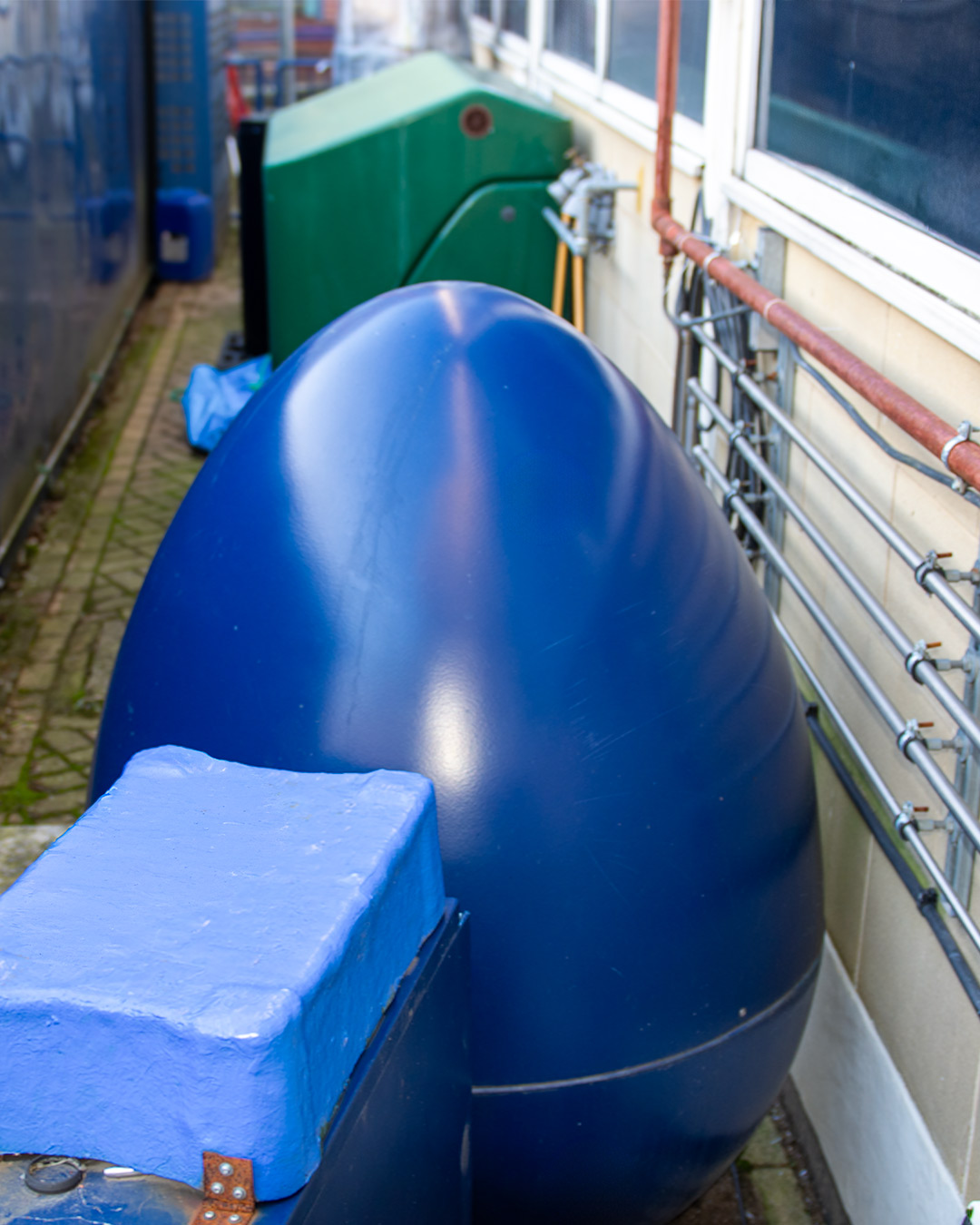
At the heart of the EIL is a unique living energy laboratory that demonstrates how waste from the University and its partners can be transformed into valuable low-carbon energy. Using technologies such as anaerobic digestion, pyrolysis, gasification and micro-gas turbines, the Lab converts agricultural, food and industrial wastes into biogas, bio-oil and biochar, which are then used for electricity generation, heat recovery and in agricultural reuse.
This fully circular approach reduces environmental impact while delivering measurable real-world research outcomes, alongside reducing the University’s waste and energy costs.
Reducing environmental impact and energy costs
Each of the three Schools plays a vital role in enabling this integrated model to work. Engineering researchers lead on renewable and waste-to-energy systems, smart integration and computational modelling. Applied scientists contribute strengths in chemistry, biochemistry, microbiology, environmental analysis and chemical engineering. Business and law researchers support the work through techno-economic assessment, sustainable business models and policy innovation, ensuring that technologies are not only technically viable but also commercially and socially sustainable.
Since its launch, the EIL has built a strong international research portfolio, including waste-to-energy from sugarcane bagasse in Kenya through an African Agriculture Knowledge Transfer Partnership; micro-hydropower systems in the UK and Nigeria; domestic food-waste digestion; industrial symbiosis; circular-economy policy modelling; and energy recovery within a major EPSRC-funded textile recycling programme.
The Lab maintains close academic collaborations with institutions including the University of York, University College London, the University of Glasgow, the University of Illinois in the USA, ECUST in China, and Kibabii University in Kenya. Beyond academia, the EIL actively engages with industrial and community partners across the UK, USA, China, Kenya and Nigeria.
Professor John Allport, of the School of Computing and Engineering, commented: “Most of the major challenges facing the world today are complex and require a multidisciplinary approach. By drawing on the combined resources from across the University and our collaborators, we are able to find solutions. Some of these affect us directly on campus and can be used to demonstrate the strength of this approach to our students in a way that they can immediately see and comprehend.”
Professor Grant Campbell, of the School of Applied Sciences, commented: “Integration and local contextualisation are key to synergising and exploiting interactions in energy systems. The University gives us a context to showcase implementation and adoption of our own home-grown research, to address our sustainability and financial goals while also demonstrating our commitment to sustainability to our students and regional partners.”
Dr Matthew Snell, of the School of Business, Education and Law, commented: “One of the strengths of this team is its interdisciplinarity. This provides a basis for combining engineering, biochemical, and environmental expertise with insights into the business models, legal frameworks and political contexts which are a feature of the Lab’s very diverse operating environments.”

Find out more about the Energy Integration Lab
By combining real infrastructure, global partnerships, applied research and industry-focused innovation, the Energy Integration Lab continues to strengthen the University of Huddersfield’s reputation for delivering impactful, solution-driven research that supports the clean energy transition and circular economy.
The Energy Integration Lab academic team comprises: School of Computing and Engineering - Professor John Allport, Research Fellow Dr Gina Javanbakht, Research Assistant Dr Lilies Kathami Kathumbi, and Research Technician Jack Edwards. School of Applied Sciences - Professor Grant Campbell and Research Fellow Dr Mohammad Alyassin. School of Business, Education and Law – Senior Lecturer Dr Matthew Snell and Reader Dr Jialin (Snow) Wu.
The Energy Integration Lab is also strongly committed to postgraduate training and early-career researcher development. With a growing cohort of PhD students, the Lab provides access to pilot-scale anaerobic digestion and pyrolysis systems, micro-turbines, emissions analysis equipment, high-performance computing and dedicated research spaces.
Current examples of Postgraduate research within the Energy Integration Lab include:

Anaerobic Digestion with Micro Gas Turbine
Zu Khin with Professors Campbell and Allport as supervisors
Zu’s PhD focuses on combining small-scale anaerobic digestion with a micro gas turbine for combined heat and power generation. Using food waste from the University canteen, the project converts biogas into clean electricity and heat. Advanced process modelling and experimental validation are used to optimise performance, efficiency and emissions.

Unlocking Micro-Hydropower Potential
Joelson Alexandre with Professor Allport as supervisor
This research examines the regulatory, institutional and policy barriers limiting the growth of micro-hydropower in the UK. The project analyses current development processes and identifies key obstacles preventing wider deployment. It aims to propose practical strategies to unlock hydropower’s full potential and strengthen its contribution to the national electricity grid.
Modification of Micro Gas Turbines
Jack Edwards with Professor Allport and Dr Javanbakht as supervisors
The focus of Jack’s project is to discover if it is possible to run a commercially produced micro gas turbine (MGT) on a renewable biogas. This would allow both a move away from using fossil fuels such as diesel to power the unit as well as allowing an integration of the turbine with other renewable technologies such as pyrolysis or anaerobic digesters which each produce biogas and could combined with a modified MGT form part of an off-grid micro power system.

Optimising Domestic Anaerobic Digestion
Ayodeji Aluko with Dr Javanbakht and Professor Allport as supervisors
This research develops a scalable framework for household anaerobic digestion as a solution for food waste and renewable energy generation. The project optimises digester size, feedstock selection and biogas quality for economic and practical viability. Life-cycle analysis is used to assess environmental, energy and agricultural benefits.
Biogas Integration in Catfish Farming
Opeyemi olwaseun Dixon with Dr Javanbakht and Professor Allport as supervisors
Dixon’s study explores the economic and environmental feasibility of integrating biogas systems into Nigeria’s catfish farming sector. The research evaluates how farm waste can be converted into renewable energy to reduce costs and pollution. The project aims to improve energy security, enhance food production and support sustainable aquaculture.

Optimising Biochar Derived From Feedstocks
Numaan Bashir with Dr Javanbakht and Professor Allport as supervisors
This project focuses on producing and characterising biochar from different biomass feedstocks to optimise its properties for agriculture, pollution removal, and energy applications. It studies how pyrolysis conditions affect biochar composition, surface area, and porosity to match specific end uses. The project also explores the use of biochar as a gasification feedstock to assess its potential as a renewable energy source.

Micro-hydropower in Nigeria
Emmanuel Odera Igwebuike with Professor Allport as supervisor
Emmanuel is a PhD researcher focusing on advancing micro-hydropower (5kW - 100kW) as a sustainable energy solution in Nigeria. His research integrates technical innovation with policy and economic analysis to improve access to clean and reliable electricity through micro-hydropower, particularly in underserved communities.
All stock images used under a licensing agreement from Adobe Stock