New book examines role of textiles in humanitarian projects
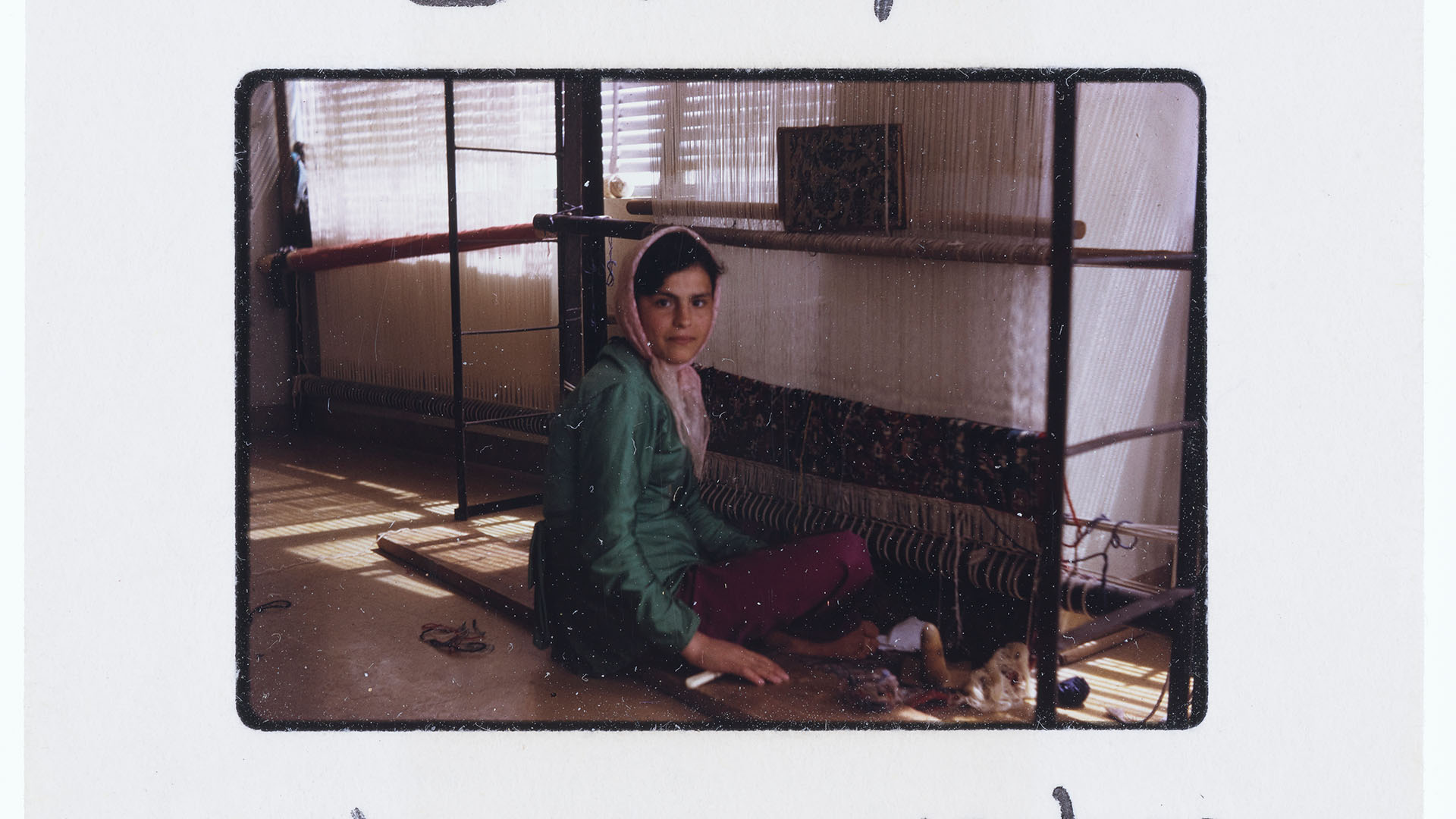
The University of Huddersfield’s Dr Claire Barber and Dr Rebecca Gill have collaborated on a new book that explores the role of textiles and crafts in humanitarian projects, a story that has deep links with Huddersfield’s own textile history.
Humanitarian Handicraft: History, materiality and trade 1840-1980 (Manchester University Press), co-edited with Dr Helen Dampier and Professor Bertrand Taithe from Leeds Beckett and Manchester universities respectively, looks at how handicrafts have been used to tackle social and economic challenges from the nineteenth century to the present.
Dr Barber and Dr Gill approached the subject from differing angles – Dr Barber is an expert in textile arts, while Dr Gill is Reader in Modern History.
“I've always worked on humanitarian histories, and I began to look at textile schemes that were used by relief organisations during the South African War (1899-1902), and subsequently in the First World War,” Dr Gill explains.
“It was the beginning of an interest in how people were using crafts like textiles as part of occupational therapy, helping to recover from war trauma by providing relief and occupation. It was also a way of replenishing goods that were lost in the war.”
Discover more about our Fashion and Textiles courses
Dr Barber was involved with The Sleeping Bag Project, which salvaged and then embellished discarded sleeping bags from music festivals that were then given to the homeless. Her strong links with the Oxfam recycling centre in nearby Batley have seen many Huddersfield students benefit from placements, which there that have helped them gain an understanding of sustainability and a craft-based approach.
“There’s an overlooked capacity to textiles," says Dr Barber, “they are not a ‘written down’ experience; they are something that is felt and thought about. We felt that this had not been widely disseminated.”
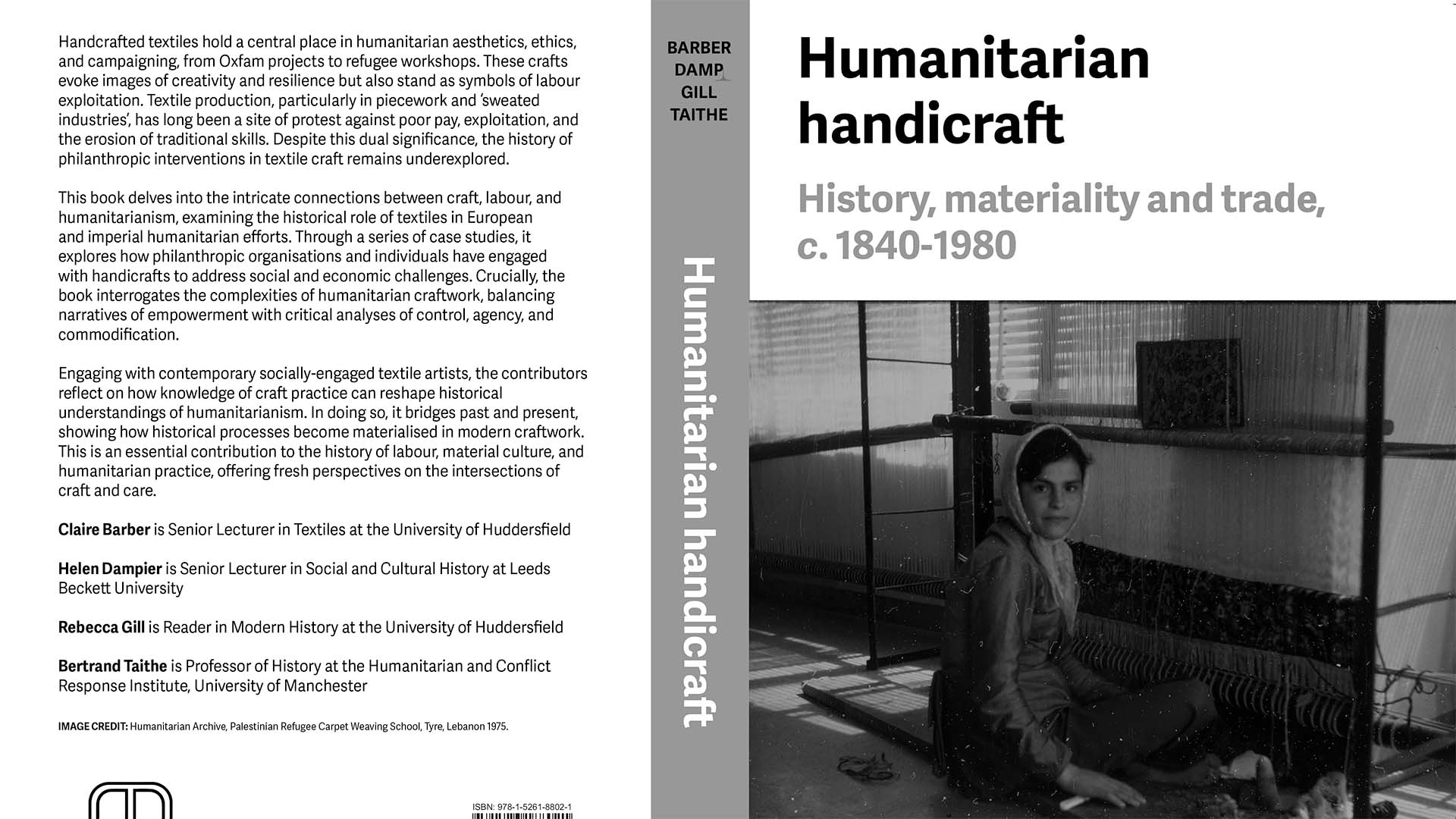
The case studies in the book assess how individuals and organisations used textiles and handicrafts to address societal issues, with the Huddersfield area having strong connections to this history. The Huddersfield Famine Relief Committee – Hudfam – helped with relief to populations in famine-stricken areas after World War Two, and was one of the very first organisations to use humanitarian handicrafts to raise funds and awareness.
Discover more about studying History at Huddersfield
"Textiles are favoured in a refugee camp, women are safe working on these projects, the skills can be taught quite easily, and they're very portable,” Dr Gill adds.
"They're an emblematic part of humanitarian relief but rarely studied by historians. Most people look at medicine projects, health and education when they think of humanitarianism, but we are among the first people who have looked at the story of textiles in this context.
"Humanitarian handicrafts are often treated as ephemeral objects, not things that are traditionally put into museum collections or archives. But we found so much that is interesting about looking at these everyday objects and the stories of people, often women, involved in these projects”
Dr Barber and Dr Gill are currently working on a new project, supported by the Paul Mellon Centre, on the embroidery produced by displaced Belgian and French women in northern France during the First World War. They are joined in this by Dr Wendy Wiertz, formerly a Marie Sklodowska Curie fellow in History at Huddersfield, now at Utrecht University, and Dr Stephanie Prévost, a research fellow at Huddersfield from Université Paris Cité.