New book builds on Huddersfield’s renown for music research
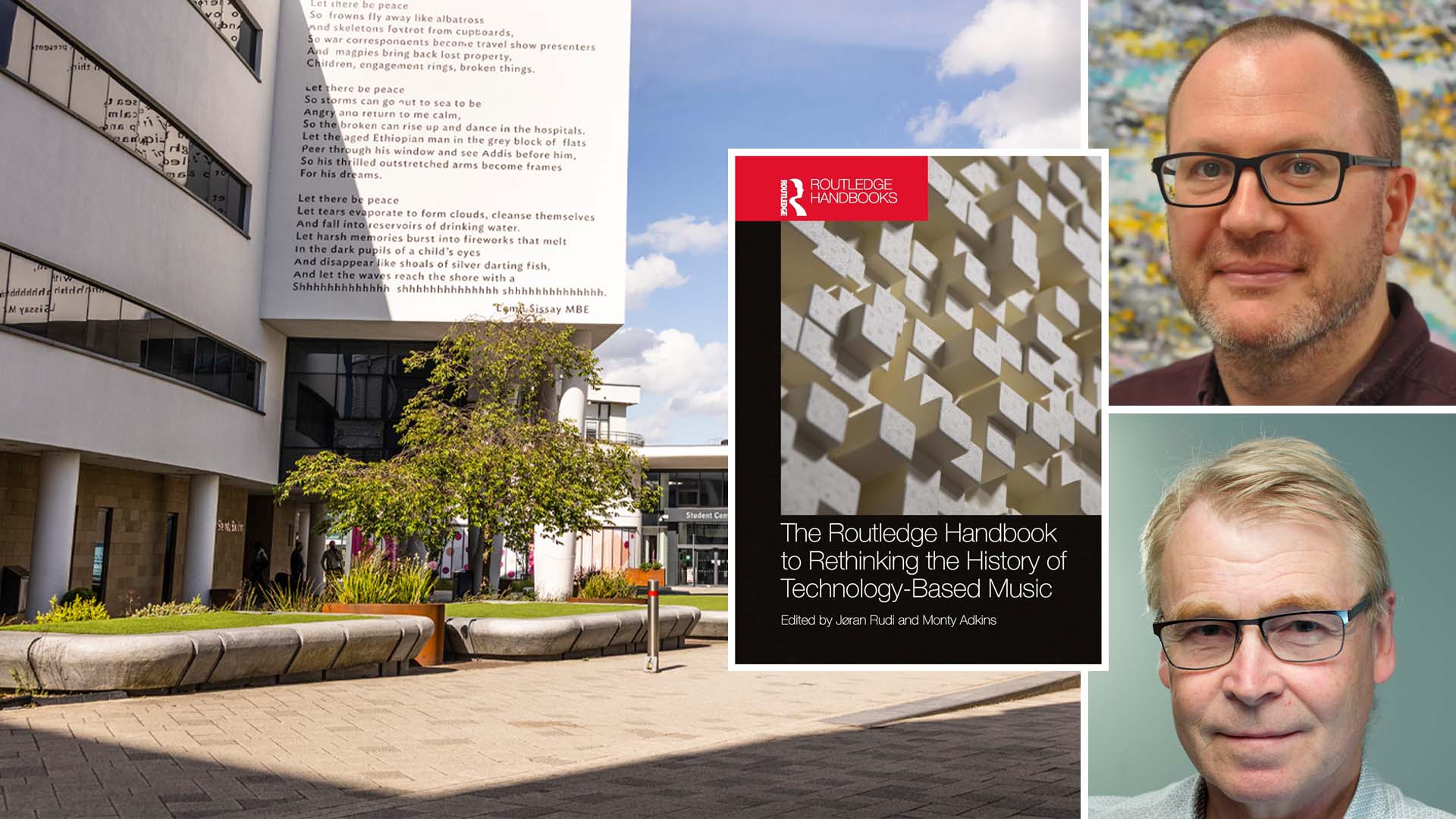
A new book on the evolution of electronic music due to the increasing use of technology from leading music academics Professor Monty Adkins and Jøran Rudi has sprung out of the University of Huddersfield’s status as a global leader in music research.
The Routledge Handbook to Rethinking the History of Technology-Based Music emerged after the pair collaborated at the University’s Centre for Research in New Music (CeReNeM) during Jøran Rudi’s Leverhulme Professorship at Huddersfield.
The book investigates how synergies between different types of music and its creators have emerged thanks to the use of technology. Those behind different styles including EDM (Electronic Dance Music), acousmatic and electroacoustic music were discovered to have more in common than previously realised, down in part to a 2022 symposium hosted by CeReNeM that inspired the authors to compile the book inspired by much of the symposium’s content.
Professor Adkins is an award-winning electronic music composer and Pro Vice Chancellor for Research and Innovation at the University. Jøran Rudi pioneered the digital development of music in his native Norway as a composer and studio director at the Norwegian Centre for Technology, Art and Music (NOTAM).

Jøran Rudi
Leverhulme Professor
“CeReNeM has long been a leading international centre for music technology,” says Jøran, “and this seemed like the perfect opportunity to gather some of the energy around technology-based music to make its history wider and more inclusive.
“Developing the research relationship that Monty and I have had for a long time seemed to be the most natural thing to do. We chose a number of articles based on the conference we held and supplemented them with pieces from other authors that we think offer significant contributions.”
Professor Adkins adds, “We wanted to move away from more exclusive terms like ‘electroacoustic music’, which have their own practises and communities, and cast a light on the similarities of different music styles that share many technologies.

Professor Monty Adkins
Pro Vice Chancellor for Research and Innovation
“We wanted to look at how those technologies were enabling certain types of musical practise, and then to look at the synergies between those musical practises. A lot of narratives that are not part of the more traditional approaches to some of these types of music, particularly around electro-acoustic and acousmatic music.”
The book features contributions from a range of experts, many of whom attended the 2022 symposium. Its scope and the nature of the changes brought by digital technology is reflected by chapters that discuss technology and its use from across the world including the Global South, Japan and South America.
It expands on a book on the history of electricity in Norwegian music written by Jøran in 2019 called “Elektrisk lyd i Norge fra 1930 til 2005”, and on a research project for Arts Council Norway about new musical practices in technology-based music, written in collaboration with Dr Ulf Holbrook.
“We wanted to expand upon the discussions at the conference, and this book has done just that,” Jøran adds. “We’ve looked at gender balance as well as the global aspect of the use of technology, and it has become a book with a more comprehensive orientation than what the conference had room for.”
Professor Adkins adds, "The great thing about this book is that we have been able to draw together threads that were in the air within our disciplines. Between Jøran's desire to expand the scope and terminology of what we're doing through talking about technology-based music, being the first to do, and our desire to expand things through the idea of post-acousmatic music.
"The Leverhulme Foundation thought it was a very good proposal because you have two academics going in the same direction who could potentially achieve a lot more together than they would individually.”