New student design competition celebrates inclusive engineering practice
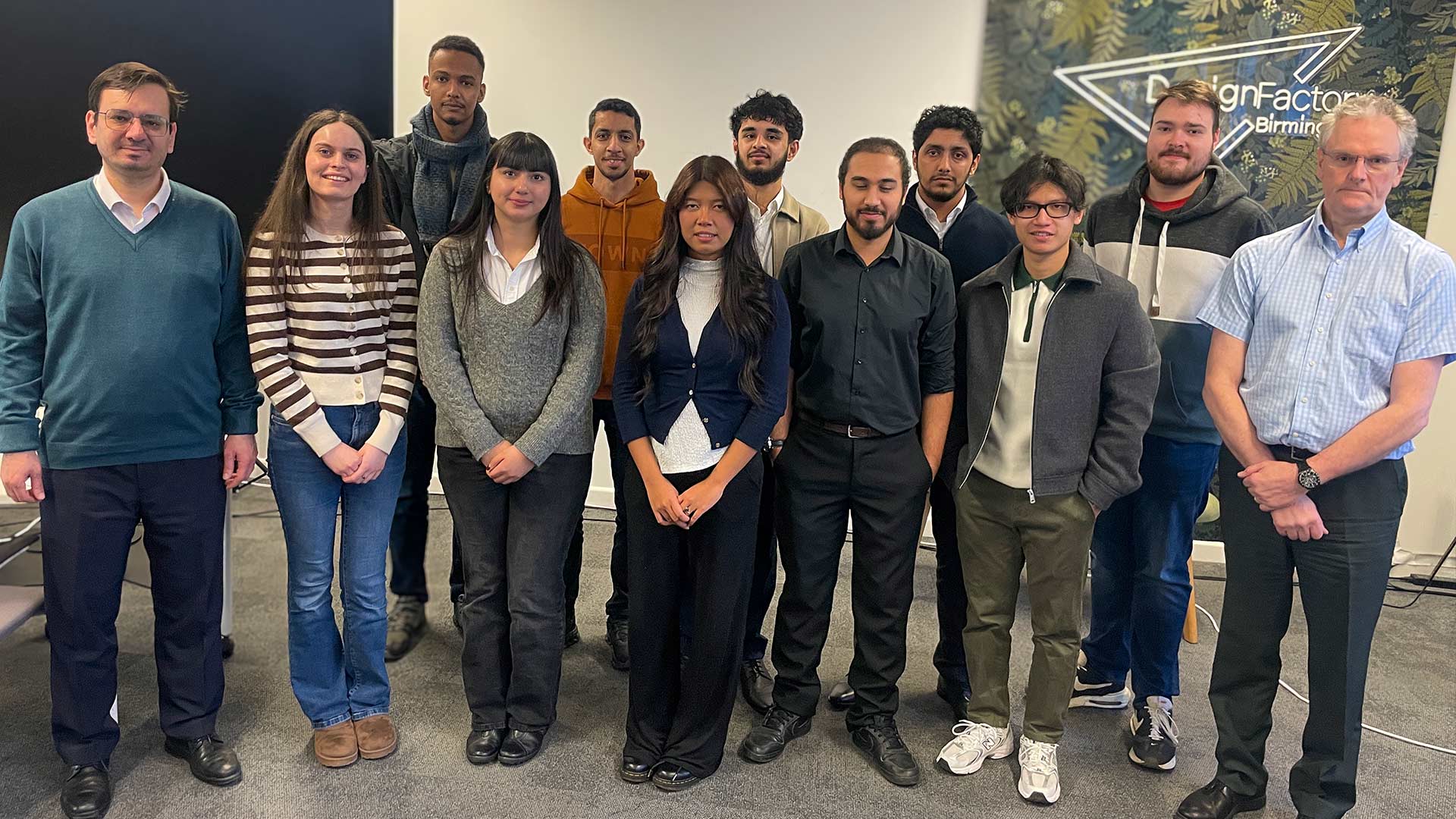
A new student design competition celebrated inclusive engineering practice via a challenge to find innovative 3D printed solutions to real-world accessibility needs.
The University of Huddersfield’s Department of Engineering developed the idea for the Inclusive Additive Manufacturing Competition and worked with partners at Aston University and Imperial College London to shape the competition’s structure, judging criteria, and educational vision.
The competition challenged students to design and create a prototype designed to address real-world accessibility needs, culminating in the national final held recently at Aston University.
The final saw eight team presentations, each comprising a pitch followed by a Q&A session, where students from all three universities showcased their innovative 3D printed solutions.
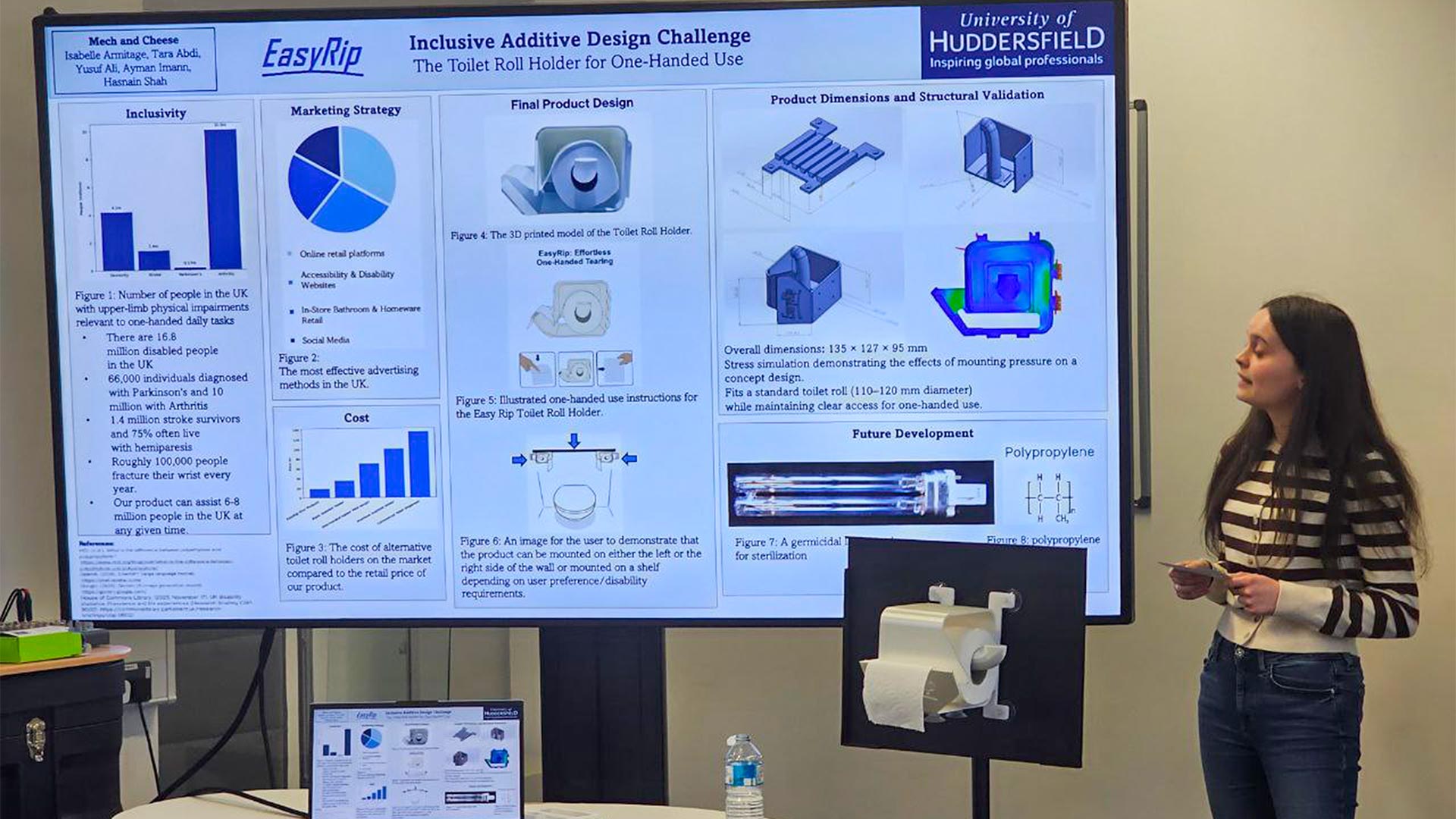
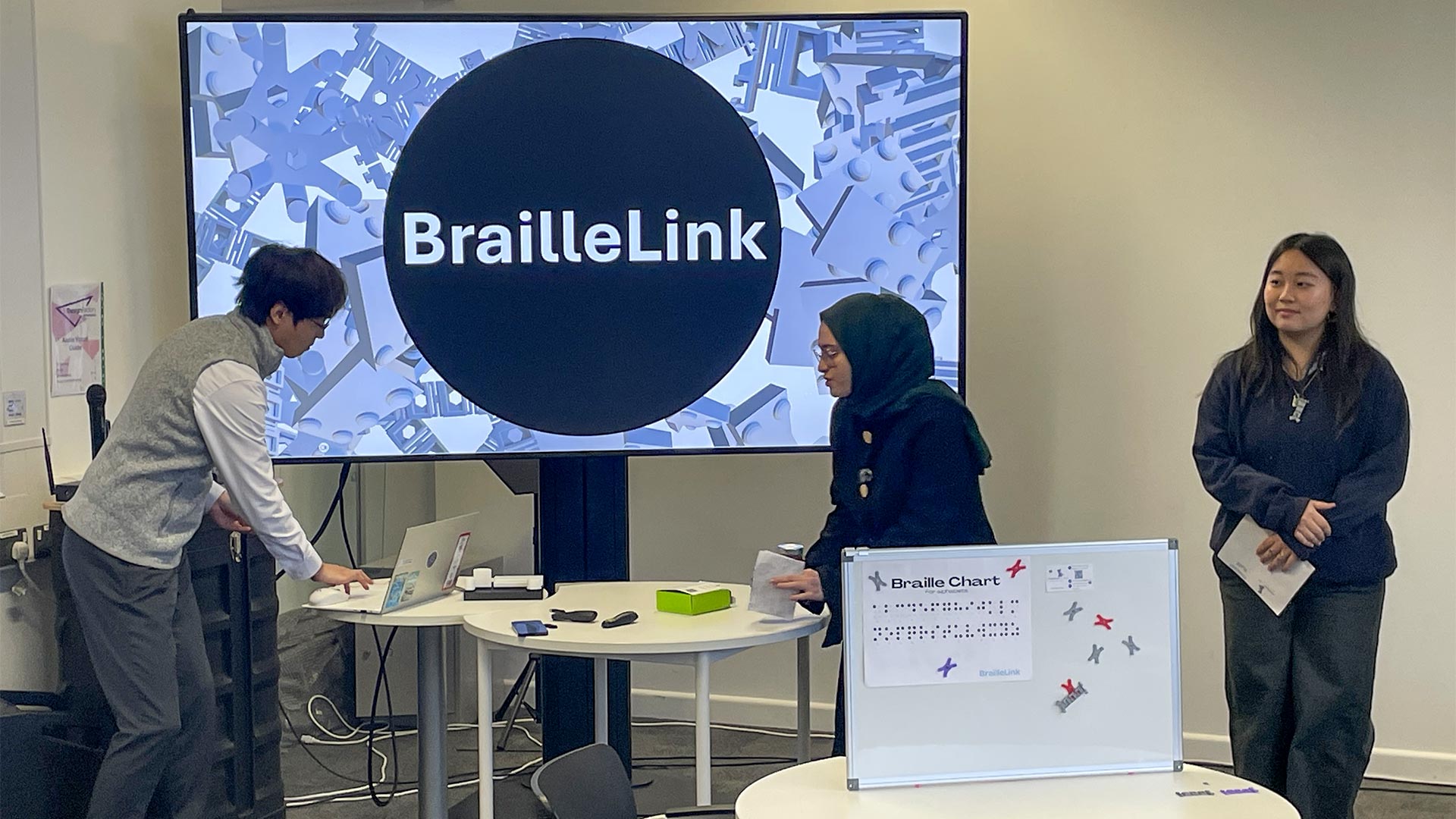
Judges praised the exceptionally high standard of creativity, inclusivity, and technical skill on display. Among the standout designs reaching the final were:
- a modular and configurable braille labelling system that provides an inexpensive way to produce tactile labels for a wide range of objects and locations.
- an elegantly simple device for securing walking sticks and crutches, enabling users to hang or prop mobility aids reliably against walls or furniture.
- a one-handed toilet tissue dispenser designed to maintain independence and dignity for individuals with restricted grip or unilateral hand use
- a universally applicable tipping aid for kettles, jugs, and other liquid containers, supporting safe, stable pouring for users with limited strength or dexterity.
The competition was sponsored by leading 3D printer firm Elegoo, which provided vouchers as prizes for the national finalists and for the winners of the local heats. In addition, they also supplied 3D printers and rolls of filament for each university, ensuring that students had the equipment necessary to make their designs a reality.
Of the final, Dr Karl Walton, Acting Head of Engineering at the University of Huddersfield, commented: “I had an excellent day at Aston with lively and very engaged students from the three competing institutions. In a friendly but challenging environment, the students overcame their nerves and delivered professional and passionate narratives about their designs. We saw really high standards of creativity and a whole range of engineering skills – from inclusive design to computational simulation, and commercialisation. I would like to commend Dr Behzad Abdi for his excellent contribution to organising the event and the sponsorship through Elegoo.”
Find out more about studying engineering at Huddersfield
The judging panel was chaired by Katy Deacon, Royal Academy of Engineering Visiting Professor of Inclusive Engineering at both the University of Huddersfield and Aston University, who plays a prominent role in promoting inclusive engineering practice. She contributes to Disabled Learner Outreach initiatives and serves on the School of Computing and Engineering’s Industry Advisory Board at Huddersfield.
She commented: “It was fantastic to judge the brilliant innovations from Huddersfield, Aston and Imperial universities. The teams had all considered the needs of individuals and included the principles of universal design within their solutions. This was a great example of collaboration between the three universities, and I look forward to seeing how the competition develops next year.”
Following the success of this year’s event, organisers across all three universities hope to expand the competition further to involve additional institutions and attract a broader range of industry sponsors in the coming year.